The coats below run from a ready-made piece you could wear to a themed dinner, to a fully built-to-measure long coat that takes four weeks and ships worldwide, with fabric and fit decisions that change depending on whether this is for one Halloween or for every cold Friday from October through March.
A Gothic Victorian tailcoat in burgundy satin can look like rented theater gear if the shoulders sag or the sleeves hang wrong, but the black wool version with its silk lining is the one you reach for year after year, and the custom route makes sense for anyone who has ever had to choose between too tight across the chest and too long in the arm.
1. Gothic Victorian Tailcoat
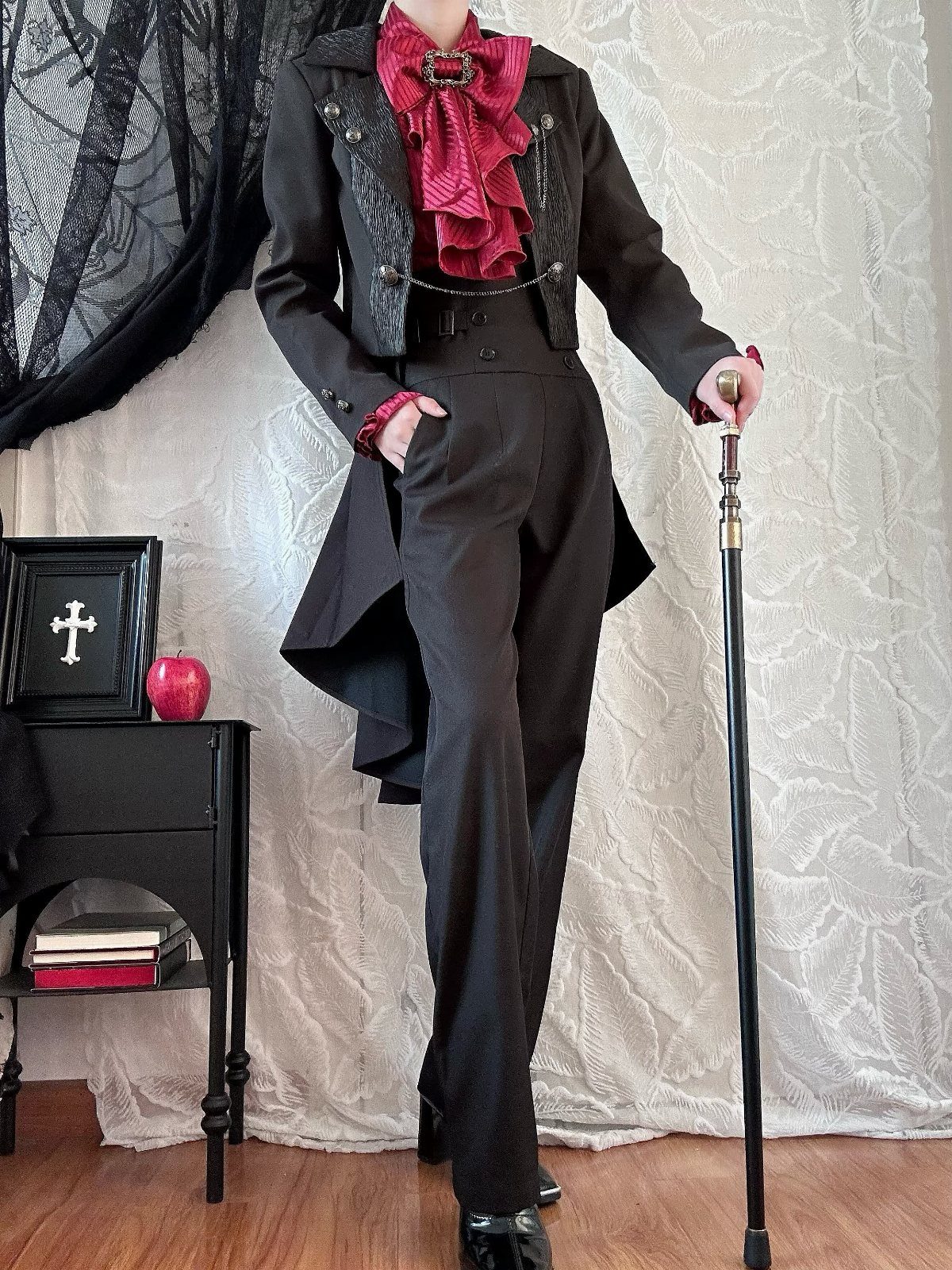
A Gothic Victorian tailcoat lives or dies on its cut, and the ones worth buying keep the tails long enough to brush the back of the knee without swallowing the legs entirely.
Burgundy satin lapels are the detail that separates costume from character; I’d look for that contrast in color or texture before I looked at embroidery, which tends to read busy in person.
For events where you need to arrive as someone else, this silhouette works with a high-waisted trouser and a ruffled cravat in silk or a good synthetic. The walking stick is optional; the posture it forces on you is not.
Off-the-rack coats need tailoring at the shoulder and waist to sit close enough to read aristocratic rather than rental.
Best for gothic weddings, steampunk conventions, or anyone whose personal style runs to the theatrical and who already owns the boots to ground it.

Medieval tailcoat for men, slim fit blazer goth frock jckect, gothic and victorian styles, long sleeve, unique tailcoat detailing, button up, side flap pockets with buttons, ensuring that you stand out from the crowd.

Material : Wool | Gothic Coat, Gothic Coat Men
2. Black Wool Victorian Long Coat

The weight of a black wool Victorian long coat comes from the flared skirt, which moves like a cape when you walk and keeps the silhouette from looking like a modern overcoat dragged backward in time.
For a version that lasts, 100% wool with silk lining is the minimum worth paying for, since polyester lining will crack at the seams within two seasons of regular wear.
The high collar stands on its own or folds down for a softer line, and the decorative buttons are functional on better pieces, which matters if you actually plan to fasten it.
This is the entry point for someone who wants Victorian presence without costume commitment. It works over modern clothes for everyday drama, or full period dress when the occasion demands.
A full-length wool coat runs heavy, and the flared skirt catches wind.

Please check the "Size Chart" before ordering. Our size chart consists of two parts: the Body size and the Garment size. You can refer both size charts to pick appropriate size. If you have any size-related questions, feel free to contact us!


Pls ignore Amazon Size Chart and refer to our size chart below: S: US34, M: US36, L: US38, XL: US40, XXL:US42, 3XL: US44, 4XL: US46
3. Custom Made Victorian Coat

A custom Victorian coat makes sense when standard sizing fails at the shoulders or the length, which it usually does if you are tall or built narrow through the torso.
An asymmetrical cut with red piping and gold buttons is the kind of detail that only holds up when the fit is precise; on a loose frame it looks like a mistake.
Order your long Victorian coat at least four weeks ahead of any fixed date, plus time for shipping.
Rush orders are possible but need direct contact first, and I’d build in time for one round of adjustments even when measurements are exact.
Colors beyond black and burgundy are available, though the grey cuff detail visible here is a quieter way to add interest than full contrast trim.
For anyone between sizes, or anyone who plans to wear this regularly enough that cost-per-use justifies the up-front price, custom is the only route that does not end in compromise.

Features: Notch lapel collar, side pockets, long sleeve, double breasted front closure, below the knee length maxi hem

Notch lapel, long sleeve, classic and dressy wool coat for women

Features: Notch lapel collar, side pockets, long sleeve, double breasted front closure, below the knee length maxi hem
4. Embroidered Fringed Cape Coat

A shoulder cape with fringe turns a plain long coat into something that reads antique shop rather than costume rental.
The embroidery keeps the eye up high, which helps if you are shorter; the fringe adds movement without the bulk of a full cape that can swallow your frame.
Wool blend holds the structure best, and the capelet attaches at the shoulder seams so it does not shift around.
I would wear this for outdoor events where you will stand around in the cold: the extra layer at the back actually blocks wind. Skip it if you carry a backpack or crossbody bag; the fringe tangles.

★DESIGN & STYLE: One fancy retro renaissance womens tails coat! Unique gothic steampunk tailcoat uniform for women. Knee length frock coat, Double-breasted decoration, stand collar, zipper up, solid color, long coat costume, swallow tail, dress jacket, exquisite vintage aristocrat style. This victorian warlock jackets will bring a fashionable touch to your look and will definitely suit all styles and seasons.

Elegant design: victorian-inspired long trench coat featuring a classic double-breasted front closure with decorative buttons and a sophisticated notched lapel collar

★DESIGN & STYLE: One fancy retro renaissance womens tails coat! Unique gothic steampunk tailcoat uniform for women. Knee length frock coat, Double-breasted decoration, stand collar, zipper up, solid color, long coat costume, swallow tail, dress jacket, exquisite vintage aristocrat style. This victorian warlock jackets will bring a fashionable touch to your look and will definitely suit all styles and seasons.
5. Burgundy Velvet Victorian Coat

Velvet in deep burgundy reads formal without the stiffness of black, and the waist belt keeps the floor-length cut from wearing you rather than the reverse.
Gold embroidery and metal buttons are the details that push it toward gothic wedding or formal gathering; without them, the same coat works for dinner out.
The pile of velvet photographs differently under flash, so check the return policy if you are buying for an event with heavy photography.
I would size up if you plan to layer a waistcoat underneath; Victorian tailoring runs slim through the ribcage and the velvet has little stretch.

Soft & Stretchy Material:Women's Gothic Jacket is made from a premium polyester blend that is soft, comfortable and well made. Delicate tailoring creates a unique fit. Allows you to wear stress-free while maintaining a stunning look.

Material: 95% Polyester + 5% Cotton, comfortable and durable to wear.

High grade velvet fabric - made of soft and luxurious velvet; The elegant texture creates an authentic Victorian Gothic aesthetic, If you like to dress loose, go one size up.
6. Back-Bow Flared Victorian Coat

The bow at the back waist does the shaping work that boning used to do, pulling the silhouette in before the flare kicks out.
This is the cut I would point toward for anyone who wants the Victorian look without the full corset commitment; the high waist and wide skirt do the period work for you.
A hooded version in brown wool exists if you need weather function, though the bow detail is what makes this particular coat read intentional rather than practical.
The flare needs space; it brushes doorways and catches wind, so hold it when you cross the street.

【Retro aristocratic style】This Gothic tailcoat combines exquisite embroidery, classic lapel and tailcoat cut,exquisite vintage aristocrat style.and dark patterned details, perfectly presenting the luxurious texture of the Victorian era.
Unisex jackect, long sleeve, knee length frock coat, lapel collar, button up, single breasting, swallowtail

Material: Polyester.Women's fashion female gothic tailcoat is all-match occasions, It is made of high quality materials,durable enought for your winter daily wearing. Stylish and fashion design make you more attractive.
7. Leather Fur-Collar Victorian Coat

Leather with a fur collar is the weightiest option here, and the fur frames the face the way a high collar does on wool versions without the stiffness against your neck.
The leather itself needs breaking in; it will creak and resist for the first dozen wears, then settle to your movement.
I would check whether the fur is attached or removable before buying, since that changes the coat’s range from full formal to something you can wear with jeans.
The full length over a waistcoat and tie reads steampunk convention or gothic event; shorten the layers underneath and it shifts toward everyday.

Pls ignore Amazon Size Chart and refer to our size chart below: S: US34, M: US36, L: US38, XL: US40, XXL:US42, 3XL: US44, 4XL: US46

★MUST HAVE HALLOWEEN COSTUMES FOR MEN: A perfect tuxedo jacket coats for renaissance-themed & rock party, Halloween costume, cosplay, masquerade, steampunk planning meeting, casual, wedding, school play, comic con, etc. You will stand out in the crowds with it. It also can be used as Beast outfit, circus ringmaster jacket, ringmaster costume, pirate captain's jacket, vampire costume, King costume, and can be used as part of leprechaun outfit in Dundalk St Patrick's parade!
Elegant design: victorian-inspired long trench coat featuring a classic double-breasted front closure with decorative buttons and a sophisticated notched lapel collar
8. Victorian Coat with Jabot

The jabot does the decorative work so the coat itself can stay simpler: flared sleeves, belted waist, and the white ruffle at the throat supplies the drama.
This is the easiest entry point for someone who wants the look without committing to full Victorian layering; the jabot is one piece that reads as costume or as fashion depending on what else you wear.
I would buy the jabot separately rather than attached, so you can launder it and swap it between coats. Cotton holds a crisper ruffle; silk drapes softer and looks more expensive but wrinkles in a car ride.

Features: Notch lapel collar, side pockets, long sleeve, double breasted front closure, below the knee length maxi hem

Stretchy Waist for this Victorian Costume Skirt is comfortable and easy to wear. Lightweight but high quality and durable. High waist and ruffled hemline element are great fit your body.

Fabric: wool and polyester
Material Options
Leather brings a harder line, more military than mourning, and works best when the cut keeps it from reading motorcycle club.
Velvet is the choice for low light and formal rooms where the nap catches candlelight or flash; it photographs well but marks easily and needs brushing after every wear.
Embroidery on velvet or wool reads richest in single colors, metallic thread or deep red on black. Decorative buttons in metal or horn should actually fasten on coats above entry-level price; fixed buttons that do nothing are a tell.
I would check that detail before paying for anything described as functional.


Occasions for Wearing
A gothic wedding is the obvious home for this silhouette, and the coat you choose should match the formality the couple set.
Black wool reads respectful without competing; burgundy velvet with gold embroidery steps closer to bridal party territory and needs an invitation that welcomes it.
Steampunk gatherings run more casual in practice than the dress code suggests, but a floor-length military cut with leather detailing and silver buttons holds up against the goggles and gear that fill the room.
The coat becomes the anchor that keeps the rest from looking like props.
For formal occasions outside themed events, the high collar and fitted sleeve of a Victorian long coat can stand in for standard evening dress if the fabric is wool or a dark velvet without visible pattern.
I would not wear embroidery to a funeral or a corporate event; plain black with functional buttons passes where ornament does not.

Pls ignore Amazon Size Chart and refer to our size chart below: S: US34, M: US36, L: US38, XL: US40, XXL:US42, 3XL: US44, 4XL: US46

Embroidered Victorian Tuxedo Jacket material: Polyester---soft,thick, warm and comfortable to wear

Pls ignore Amazon Size Chart and refer to our size chart below: S: US34, M: US36, L: US38, XL: US40, XXL: US42, 3XL: US44, 4XL: US46
Custom Sizes Available
Standard sizing fails most often at the shoulder and the overall length, which is why custom work exists for this silhouette. The baseline turnaround assumes your measurements are taken correctly, which is a bigger assumption than most people realize.
One round of adjustments after the first fitting is normal even with exact numbers, so the real timeline from order to wearable runs longer than the quoted estimate.
The up-front price only makes sense if the coat will see regular wear; for a single event, alterations to off-the-rack are the better math.
Frequently Asked Questions
What is a Victorian coat called?
A Victorian coat is usually called a frock coat or tailcoat.
A frock coat flares at the skirt and stops at the knee, while a tailcoat leaves the front cut away and lets the back panels trail to the same length.
Both shapes rely on a close fit through the shoulder and waist to read as period rather than costume.
What are those long coats called?
Long coats go by several names depending on the cut. An overcoat is the general term for any full-length outer layer.
A frock coat has a flared skirt all around, and a tailcoat keeps the front short with tails in back. A black wool Victorian long coat reads as a frock style; a Gothic Victorian tailcoat reads as the tail style.
What were coats called in the 1800s?
In the 1800s, long coats were called frock coats or greatcoats. A frock coat had a fitted waist and flared skirt that marked formal daywear, while a greatcoat was a heavier overcoat worn for warmth and weather.
The tailcoat, with its cutaway front and long tails, carried over from earlier century dress and stayed in use for evening.