These 6 Edwardian coats for women run from a grey patterned walking coat with high collar to a tiered ruffle design held together by a single dark red bow.
The one that belongs on you depends on whether you need period accuracy for historical events or a coat that reads Edwardian without trapping you in costume.
The standing collar or turnover collar each changes the whole mood, and the sleeve choice between standard coat length and the fuller bell shape is what dates the piece to the decade.
1. Victorian Outerwear History

Women’s outerwear from the 1830s through the 1910s moved through four main shapes: cloaks that fell sleeveless from the shoulder, capes as their shorter cousins, full-length fitted coats with sleeves, and jackets cut above the hip.
Between these sat the mantle, a catch-all term for lengths that blurred the lines.
The early Victorian years favored the cloak after the pelisse wrap fell out of fashion, but by the Edwardian era the fitted coat had returned in force.
For anyone building a historical wardrobe, this progression matters because it shows when a sleeveless cape reads as mid-century versus when a structured coat places you closer to the turn of the century.


PATTERN S8218 SIZING: Simplicity pattern includes women's sizes XS-XL so you can sew your ideal fit. Pattern sizing runs differently from ready-to-wear clothing, so measure and check the body size chart before cutting.

Sew a winter coat with round collar, pointed collar, or funnel neck designed by Lisette
2. Design Features of Jackets

The 1910s jacket pattern I keep returning to offers two collar paths: a standing collar for dressier occasions or a turnover collar for daily wear.
Either way, the neckline can sit high or open, and the sleeves split between standard coat length with optional decorative cuffs or the fuller bell shape that reads more distinctly period.
The hem finishes straight for a tailored line or rounded for something softer, with the body length running 20 or 22 inches from neck to edge. Front pockets with lap detailing add practical storage without breaking the silhouette.
For my own sewing, I’d take the turnover collar with bell sleeves in a mid-weight wool; the combination forgives slight fitting errors and moves well from day to evening events.

Size Guide: XS=US 0-2, S=US 4-6, M=US 8-10, L= US 12-14, XL=US 16-18, XXL=US 20-22. Last picture is the size chart, if you are not sure about the size, please contact us without hesitation.

Doll Collar, Long Sleeve, Full Line, Button Front, Flap Pocket Jacket, Solid Color

RELAXED LONG SILHOUETTE A relaxed oversized silhouette creates a comfortable drape with extra room for sweaters, shirts and layered outfits without feeling bulky
3. Grey Patterned Edwardian Walking Coat

A walking coat in grey with patterned panels asks for attention at the sleeve and side seams rather than the body.
The high collar and dark buttons keep the front severe, which lets the houndstooth or textured accents read as deliberate contrast rather than busy noise.
The purple lining visible at the hem or cuff is a private detail; it rewards the wearer without demanding an audience. For body shape, the vertical paneling and high-low cut favor someone who wants length without drowning their frame.
Check that the shoulder seam sits true; a dropped shoulder on this cut turns structured into sloppy.

Fabric: 92%Viscose8%Spandex. This long sleeve shirt for women is made from soft, breathable, and lightweight fabric.

5t white tshirt the boys polo shirts girls tshirt size 14-16 girls clothes black black collared shirts for women dry fit 5t polo shirts for boys green girls'+school+uniform+clothing striped golf polo shirts toddler cowboy shirt back to school uniforms for girls girls school uniforms kids uniform shirts dress shirt for boys uniform shirts for girls 10-12 girls shirts size 7 kids tube top boys tank tops white v neck shirt boys polo shirt size 7 toddler shirts boys 3t

Fabric: 92%Viscose8%Spandex. This long sleeve shirt for women is made from soft, breathable, and lightweight fabric.
4. Plaid Coat with Capelet

The capelet on this plaid coat solves a problem I run into often: how to get period drama at the shoulder without the full cloak’s tendency to tangle in doors and bag straps.
It gives the silhouette of a mantle with the practicality of sleeves underneath. The brown plaid reads autumnal and grounds the romantic shape; paired with a matching cap, it becomes a full look without requiring additional layers.
For modern wear, I’d keep the boots sleek rather than costumed. The capelet length matters: ending at the elbow flatters most arms, while a longer capelet can shorten the neck.

Zeagoo women pea coat go for a sleek look and wear over a slim fit top and bottom to show a more feminine silhouette

Material Type: Our womens houndstooth trench coat is made of 95% polyester 5% spandex. Soft material gives you great wearing experience all the day

5. Embroidered Long Tailored Coat
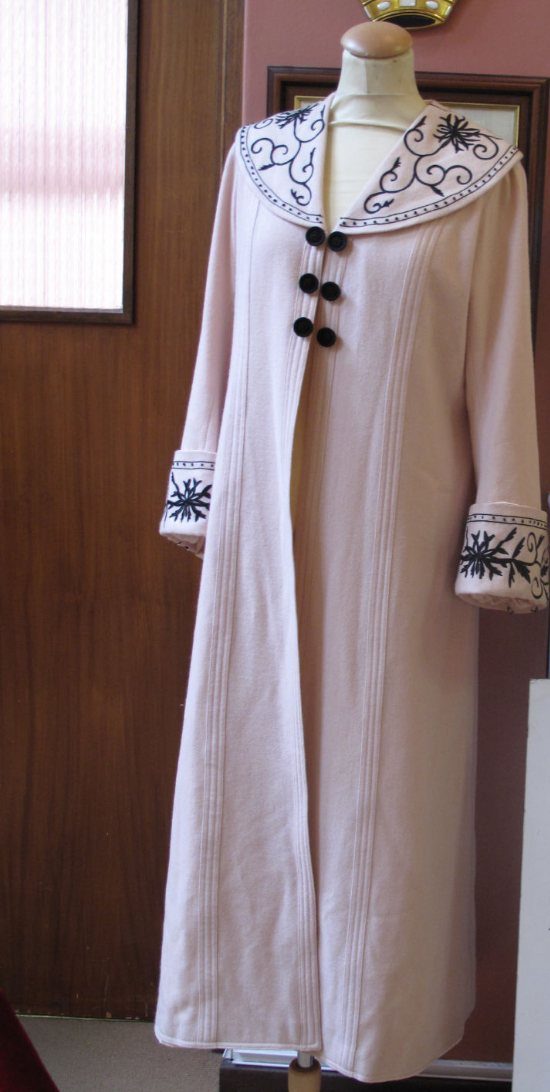
Black embroidery on pale pink is a combination that only works because the scrollwork stays confined to collar and cuffs, framing the face and hands rather than wandering across the body.
The wide lapel demands a strong shoulder to carry it; on a narrow frame, the proportions turn childlike. Large buttons down the center front continue the graphic vertical line.
For someone sewing this themselves, the embroidery is the make-or-break element: hand-worked chain stitch or satin stitch in silk thread gives the raised, slightly irregular quality that reads as period, while machine embroidery flattens the effect into costume.
I’d budget the time or commission the embroidery separately rather than rush it.

PATTERN S8770 SIZING: Simplicity one-size pattern includes costumes designed for a comfortable, adjustable fit. Check the finished measurements on the envelope before cutting so your make turns out just right.

PATTERN S9944 SIZING: Simplicity pattern includes women's sizes XS-XL so you can sew your ideal fit. Pattern sizing runs differently from ready-to-wear clothing, so measure and check the body size chart before cutting.

Includes sewing templates, fabric recommendations, pattern pieces, sizing guides, and English, Spanish, and French instructions for (1) costume jacket and (1) costume dress.
6. Tiered Ruffle Edwardian Coat

Tiered ruffles from shoulder to hem add volume in horizontal bands, which sounds risky but works here because the grey keeps the texture from reading as pure decoration.
The dark red bow at the neck provides the single point of color; without it, the coat would sink into background.
For the reader who sews, the ruffles are graduated in depth, with the upper tiers shallower and the lower ones deeper to avoid bulk at the armscye.
This cut favors height; on a petite frame, the horizontal breaks compress rather than elongate. A coordinating skirt with subtle striping continues the vertical line beneath the ruffles, which is the detail that saves this from looking like a cake.

Sewing pattern packet comes with sewing templates, notions and fabric recommendations, pattern pieces, sizing guides, and instructions

New Look sewing pattern kits come with sewing templates, fabric recommendations, pattern pieces, and instructions, and the packaging includes information on how to select fabric and trims, as well as sizing information

PATTERN S1254 SIZING: Simplicity pattern includes women's sizes 4-12 so you can sew your ideal fit. Pattern sizing runs differently from ready-to-wear clothing, so measure and check the body size chart before cutting.
Edwardian Fashion Overview
The Pictorial Review started in 1899 and patented its pattern marking system in 1907, which let women at home sew the fashionable garments they were seeing.
The multiple collar and neckline options let a woman personalize her jacket without losing the period silhouette.
For anyone choosing between Edwardian pieces, this range of built-in options matters. When I look at modern reproductions, I’d check that the pattern includes both collar paths; a version offering only one has lost the point.
Sewing Pattern Accessibility
Digital patterns arrive immediately after purchase, so a project starts the same day. Multiple copies cost nothing extra, which matters when a muslin test fails or a sleeve gets cut wrong.
Storage stays invisible until needed. No boxes of tissue patterns, no envelopes splitting at the corners.
For a sewing group, one purchase covers every member’s printout.
I’d weigh the environmental claim carefully against personal habits. If the pattern gets printed once at a shop, the math shifts.
The real convenience is reprinting after mistakes, not virtue.

Chic Drawstring Design: Elevate your casual look with our women's denim jacket featuring an adjustable drawstring hem. This unique detail creates a flattering cinched waist, adding a feminine touch to the classic jean coat silhouette

Fabric: 92%Viscose8%Spandex. This long sleeve shirt for women is made from soft, breathable, and lightweight fabric.

boys red plaid shirt family matching flannel shirts fall toddler girl toddler basic long sleeve shirt girl boy shirts size 8 toddler boy brown shirt 5t boys clothes boys collared shirts size 10-12 kid long sleeve thermal construction shirt toddler baby girl long sleeve shirts white long sleeve shirt girls 10-12 boy long sleeve shirts girls bottom ruffle top toddler sweat shirt baby boy buffalo plaid outfit sweater vest toddler boy kids long sleeve shirts for girls ployester
Historical Context
The Pictorial Review’s 1907 patented marking system changed home sewing by standardizing how pattern pieces were labeled and aligned.
For dating outerwear accurately, the shift from cloak to fitted coat matters more than fabric or trim. A sleeveless cape placed in the 1840s reads correctly; the same cape worn for 1910 looks like a deliberate costume choice or a mistake.
When building a historical wardrobe, I start with the silhouette progression, not the surface detail.

Collared Shape: A Broad Folded Collar And Textured Body Give This Jacket A Familiar Casual Profile. The Long Sleeves Coordinate with Plain Tees, Everyday Shirts, Jeans And Relaxed Trousers for Autumn Outfits.

Houndstooth Poly Rayon Fabric: Made from a soft 70% polyester and 30% rayon blend woven in a classic houndstooth check that holds its shape and drapes neatly for a crisp, tailored look

Houndstooth Poly Rayon Fabric: Made from a soft 70% polyester and 30% rayon blend woven in a classic houndstooth check that holds its shape and drapes neatly for a crisp, tailored look
Variations in Outerwear
Victorian and Edwardian outerwear sorted into four main forms. Cloaks fell sleeveless from the shoulder, full-length or three-quarter length.
Capes were their shorter cousins. Jackets cut above the hip completed the set.
Contemporary naming was messy. At one date, almost any outer garment became a cloak regardless of sleeves.
At another, coats and cloaks alike were mantles.
The 1840s favored half-length and three-quarter-length mantles in varied shapes. Jackets appeared sparingly then, grew more common in the 1850s, and became a main style later.
For my own purposes, the tidy classification matters more than the period’s own inconsistent vocabulary.

Includes sewing templates, instructions, fabric recommendations, pattern pieces, and sizing guides for (1) costume cape.

New Look Pattern 6535 / D0730 Misses' Capes in Four Lengths SEWING PATTERN

Sewing Rating: Very Easy
Frequently Asked Questions
What did Edwardian ladies wear?
Edwardian ladies wore tailored jackets and fitted coats with structured silhouettes, moving away from the sleeveless cloaks favored earlier in the Victorian era.
Standing collars read dressier; turnover collars read daily, and sleeves could stop at standard coat length or flare into a fuller bell.
What is Victorian vs. Edwardian?
Victorian fashion precedes Edwardian, and the shift from one to the other shows clearly in outerwear. A sleeveless cape reads mid-century; a structured coat with sleeves reads closer to 1900.
What coats did Victorian women wear?
Victorian women moved through four main outerwear shapes: cloaks that fell sleeveless from the shoulder, shorter capes, full-length fitted coats with sleeves, and jackets cut above the hip.
The cloak dominated early Victorian outerwear once the pelisse wrap faded, though the fitted coat came back hard by the Edwardian years.
What colors were popular in Edwardian fashion?
Grey works as a base tone, often broken up by houndstooth panels or textured accents, with brown plaid reading autumnal. Black embroidery on pale pink appears as a deliberate combination, with dark red used as a single accent point.
Purple shows up as a private lining detail, hidden at hem or cuff so the wearer sees it but no one else has to.