Black eyeshadow looks range from a whisper of matte at the lash line to a mask of pigment climbing toward the brow bone, and the deciding factor is never the shadow itself but the lighting you’ll stand in.
Cream base underneath changes everything: it grips pigment so powder doesn’t blow out under flash, a trick Sephora beauty director Myiesha Sewell builds every smoky eye on. Skip the primer and even careful blending turns muddy by noon.
1. Classic Black Smoked Eyes
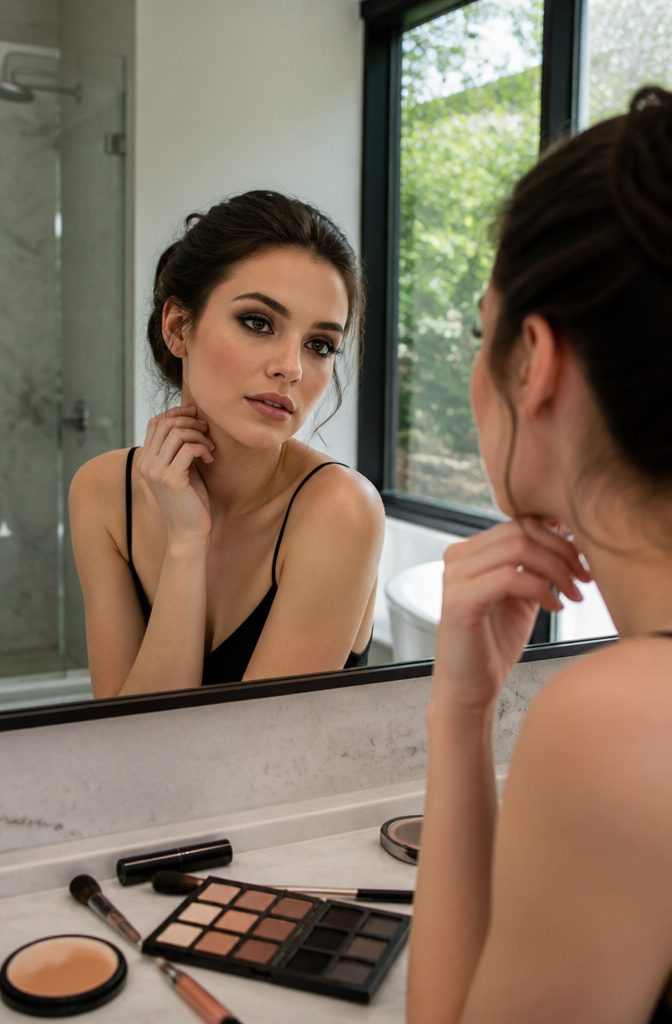
A primer underneath changes everything. I learned that the hard way after an hour of careful blending turned muddy by noon because my lid oil broke through the pigment.
Now I lay down a thin base first and let it set while I do my brows; the shadow grips instead of sliding.
Start with a light hand, especially if your complexion runs fair.
Gray, silver, and taupe do the heavy lifting for the shape, and black comes in last for intensity exactly where you want it: the lash line, the outer corner, maybe a whisper through the crease.
The right brushes matter as much as the color.
A fluffy crease brush builds the transition, a flat packing brush lays pigment on the lid without fallout, and a small buffing brush pushes black into the outer V and along the lower lash line.
I keep a second clean fluffy brush just for marrying the edges together; the seamless finish lives or dies in that last pass.
Matte black reads classic at a 9 AM meeting and edgy at midnight depending on how much skin you let show through.
For day, I stop at a single soft layer and pair it with nude lip color and barely-there cheek. For evening, I build the intensity in two more passes, each one smaller and more focused than the last.

Waterproof Eyeshadow Palette: The eyeshadow palette is waterproof and long-lasting for all-day wear.

PRO-LEVEL PERFORMANCE: Unlock your creativity with rich, matte shades that blend effortlessly for bold, buildable color and all-day vibrancy—perfect for crafting stunning, professional eye looks that empower your style.

🎁 【 Makeup Sets For Women Full Kits 】 makeup set include - 1 retractable compartments makeup kit with 90 color shimmer eyeshadow, 90 color matter eyeshadow palette, 2 color blushes, 2 color face pressed powder, 6 color eyebrow powder, 6 eyes applicator, 1 eyeliner pencil, a full size big mirror + 3 pcs lipstick + 8 pcs makeup brushes + 1 Concealer + 1 pcs Eyeliner + 1pcs eyebrow pencil + 1 pcs sponge puff.
2. Black Smokey Eye

Black smokey eye makeup lands differently than the gray-and-brown classic most of us learned first.
The shade reads as a neutral on every skin tone, which means the drama comes from technique, not color matching. That shift matters when you’re deciding how much time to give it.
A black smokey eye will always be a classic beauty staple.
What makes it wearable is the same thing that makes it easy to overdo: black demands careful blending to execute like a pro. Sephora beauty director Myiesha Sewell builds these looks from cream shadow first, not powder.
The cream acts as a magnet for whatever layers on top, so you dip into your palette fewer times to build pigment. Flash photography also reads cream more reliably than traditional shadow, which can blow out under lights.
For a modern, minimalist take, start with kohl liner to frame the eye and draw out a wing while the pencil is still malleable. Pat matte black shadow onto the lid and blend into the crease.
The result is linear and controlled rather than diffused all around. Cream underneath powder is the combination that keeps the color dense without the dusty fallout that pure powder can leave on cheeks by midnight.

Enhance Your Look: Your make up look isn't complete without L'Oreal Paris Le Shadow Stick. This eyeshadow stick glides on effortlessly & evenly for a rich look on a variety of skin tones. Bold, creamy color available in smokey, matte and shimmer shades
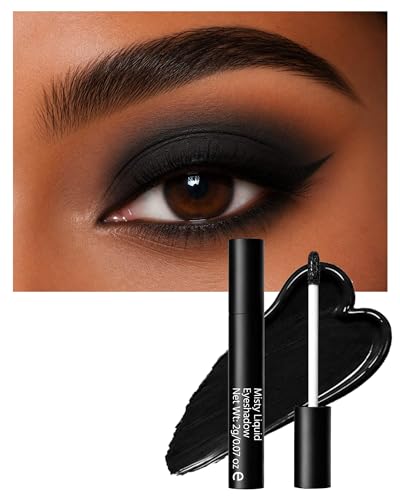
Quick-Drying & Long-Lasting: Our advanced matte liquid eyeshadow with a crease-resistant, smudge-proof formula that stays vibrant for 12+ hours. No stickiness, no fading—just flawless color from desk to dinner

❤ 【Matte Cream Eyeshadow 】: Oulac Cream Eyeshadow makes creating dramatic, smokey eye and cat-eye looks effortless. Whether for everyday wear or special occasions, its versatile black tones offer a range of bold and chic styles. Experiment with ease to achieve a flawless, long-lasting look. Try our Black Matte eyeshadow shade for a striking effect.
3. Bright Black Shaded Wings
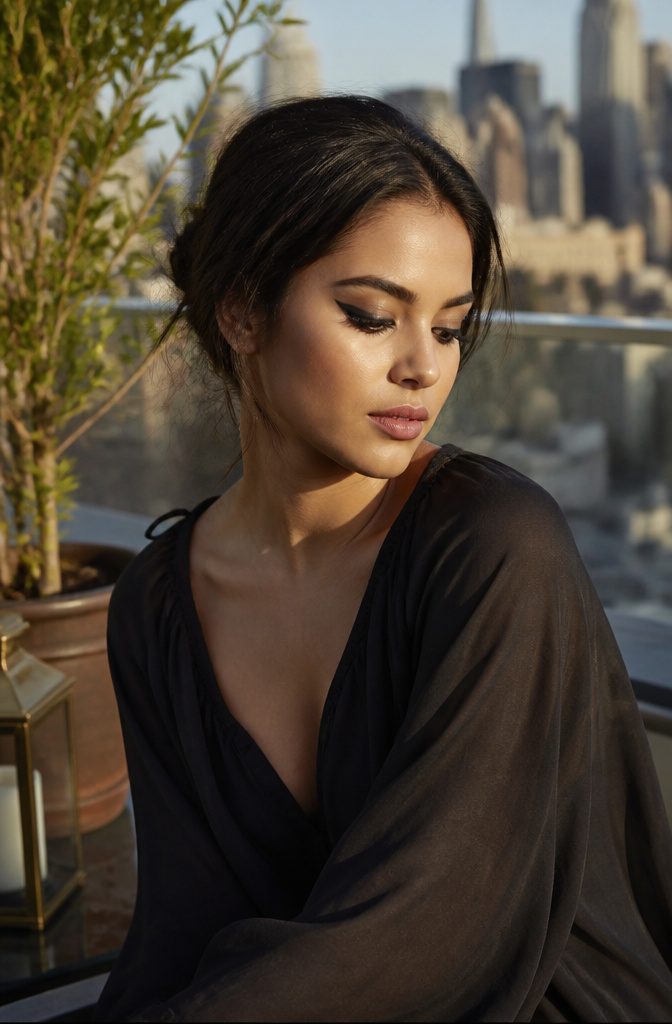
Black shadow wings live or die by the edge, and an angled brush dampened with a little water turns the same pressed pigment into something that behaves almost like liner.
Dry shadow gives a feathered, blurred line that softens into the crease; wet shadow lays down a darker, more controlled stroke that still keeps that smoked quality liquid liner can’t replicate.
I reach for the dry version when I want the wing to read as shadow doing the work, not a graphic liner replacement.
The softer edge is the point here. Using shadow as liner keeps definition from looking harsh, especially along the lower lash line where pencil can read heavy by mid-afternoon.
Press the top edge of the damp brush into the pigment, then stamp along the lash line in short connects rather than dragging for one continuous stroke. The slightly smudged result flatters fine lines instead of settling into them.

MUIIGOOD Eyeshadow Brush Eye Makeup Brush Professional Blending Eyeshadow Makeup Brushes for Concealer Eyebrows Eyeliner Soft Hairs Makeup Tool for Precision Application Flawless Blending Contouring

AFFORDABLE PROFESSIONAL QUALITY: Achieve flawless, blendable matte looks with five silky shades that deliver rich, buildable color—perfect for trendsetters who want top-tier style without breaking the bank.

Vibrant Color Range: MEICOLY offer a diverse range of shades for eyeshadow,including off white(beige) eyeshadow,white eyeshadow,black eyeshadow,light blue eyeshadow,green eyeshadow,coffee eyeshadow,red eyeshadow,macaron grey eyeshadow,catering to various preferences and allowing you to find your perfect match.All MEICOLY matte eye shadow come with mirror and brush.Gently remove the sealing film from the mirror before using the eyeshadow.
4. Colorful Black Leopard Stripes
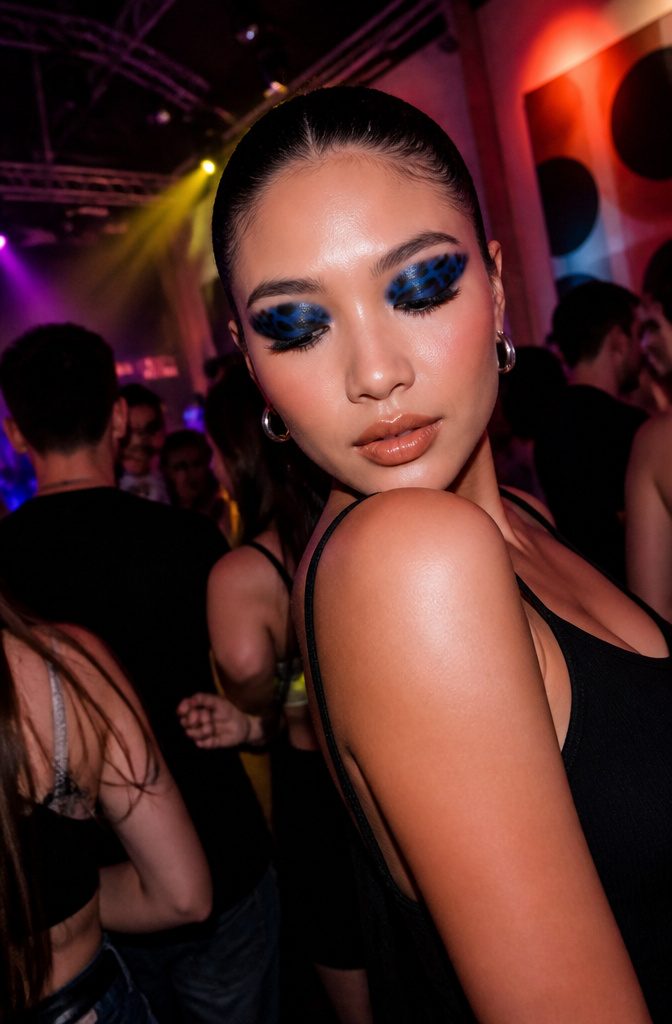
A black base is what gives this look its structure, and the color sits right on top of it in sharp, deliberate stripes.
Myiesha Sewell at Sephora builds her smoky eyes this way: cream shadow first, powder on top, so the pigment has something to grip. For leopard stripes specifically, that same layering keeps the color from going muddy against the black.
A synthetic brush lays down the cream base across the lid, then a fluffier brush softens the edges into the crease so you have a faded frame to work inside.
The stripe detail needs a thin, firm brush, something you can drag in short strokes without the line going wobbly.
The contrasting color goes on the center of the lid and gets blended outward and upward, but the stripe pattern itself stays graphic, not diffused.
Iridescent blue against black reads punk and diaphanous at once; duo-chromes from a palette like Pat McGrath Labs’ Mothership III catch light the way flat color won’t.
This is a party look, full stop, not something you wear to a 9 a.m. meeting. The flash photography advantage of cream underneath matters here too: the stripes survive phone cameras and club lighting in ways powder alone won’t.

SILKY SMOOTH KOHL EYELINER PENCIL: Ideal for creating crisp lines or sultry, smoky eye looks—available in smoldering shades!
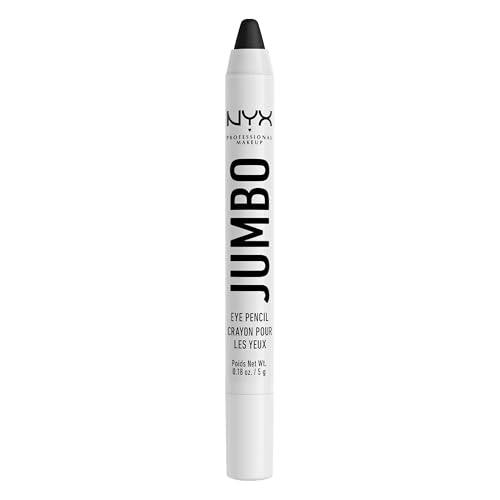
Eyeliner Crayon: This blendable radiant eyeliner pencil is a total triple threat; Use Jumbo Eyeshadow Pencil as a creamy eyeshadow, eye liner and highlighter; Apply it to your waterlines, inner corners and entire lid for a pop of intense color

Retractable Eye Liner: A line and defined eye is just a twist away with this eyeliner pen; Intense pigment covers like a liquid eyeliner while its creamy formula holds for hours; No need to sharpen just twist up and apply for a winged out eyeliner look
5. Black Metallic Look
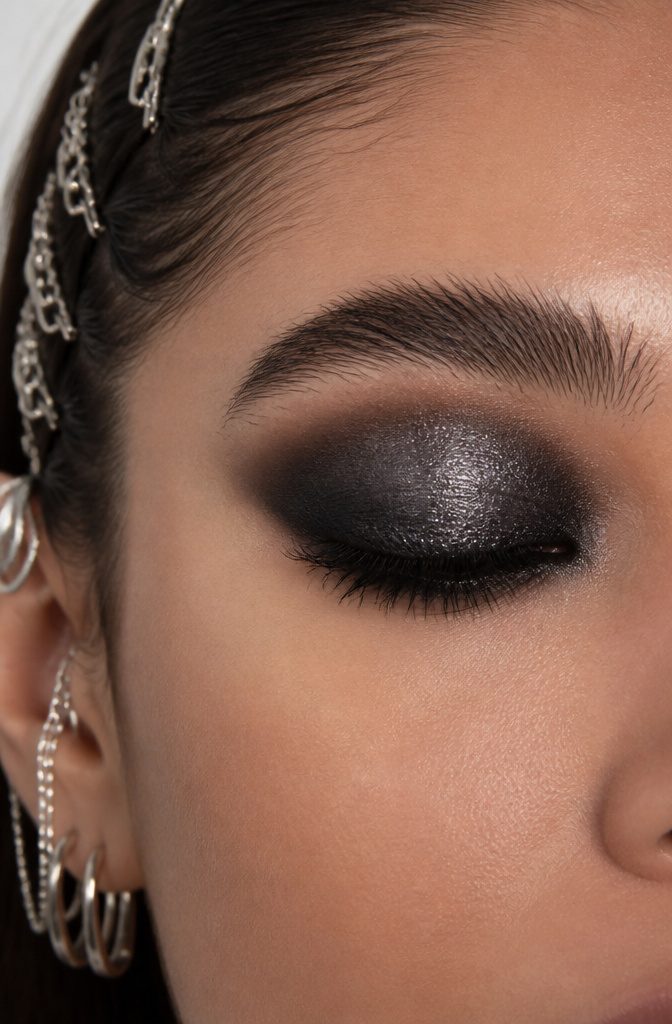
A metallic finish catches light instead of swallowing it, which changes how black sits on your lid from flat shadow to dimensional shape.
You get that shift from cream or liquid bases made with mica or hybrid pigment; pressed powder metallics need a damp flat brush or tacky primer or the shimmer dumps out before the color builds.
I find starting from a mid-tone base, charcoal or deep taupe, gives you something to push the black metallic against so the depth reads as deliberate gradient rather than a single dark swipe.
The tiny planes of the lid, the socket line, the brow bone, each one bounces light back differently, so the same metallic black can look almost gunmetal in the inner corner and liquid ink at the outer edge.
That is why building from a base matte shade matters more here than with true glitter; you are shaping with light, not adding sparkle on top.

Vibrant, Long-lasting Color: Urban Decay 24/7 Eyeshadow singles deliver high-pigment, richly saturated color with up to 12 hours of wear. The velvety-soft formula glides smoothly onto lids and builds easily, with shades ranging from soft everyday neutrals to rich jewel tones. Create everything from subtle definition and soft washes of color to bold, dramatic eye looks with vibrant, crease-resistant wear that lasts from day to night.

【Vibrant Color Selection】Choose from 14 stunning shades, including 9 mattes (Snow, Gray, Spicy, Forest, Sea, Blue Sky, Dark, Buff, Coffee), 2 soft shimmers (Blue Spark, Tapestry Taupe), and 3 high-shine glitter shades (Moonlight, Saturn, Glass), perfect for daily wear, festivals, and performances.

【❤All-in-One Makeup Pallet for Teens & Women】UCANBE Pretty All Set make up palette features 86 versatile & ultra-blendable shades, including 80 eyeshadows, 2 highlighters, 2 blushes, and 2 contours. Pigmented eye shades ranges from black gray white silver goth eye makeup shades to bright rainbow colors to sparkling metallic glitters to rose rustic nudes & brown taupe neutrals, and multi-finishes ranges from smooth mattes to velvety shimmers to dazzling metallic to fine pressed glitters.
6. Au-So-Natural Look
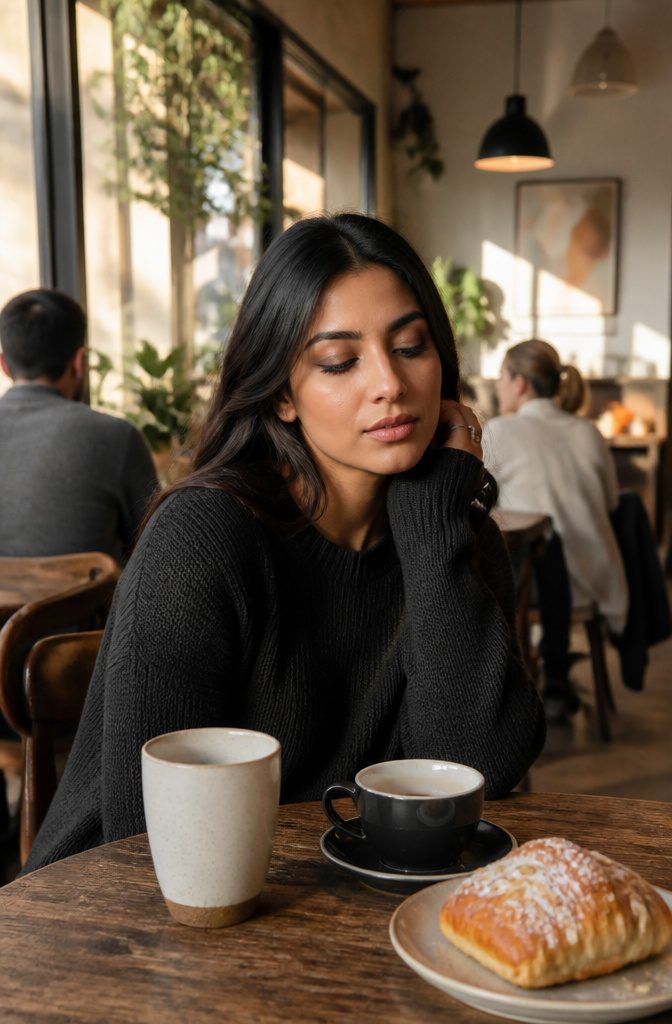
Matte formulas survive harsh daylight better than anything with shimmer. The texture reads softer, which matters when fluorescent office lights or a 10 a.m. coffee date are the only audience for your black eyeshadow looks.
A light hand is the whole trick here. Load your brush, tap the excess off, and blend until the edge disappears into your skin tone rather than stopping at the crease line.
Build intensity only where you actually need definition, usually the outer third of the lid and a whisper along the upper lash line.
Pair the eye with a nude lip and barely-there cheek color. The balance keeps the look intentional rather than accidental.
One of the better formulas I have seen for this, a creamier black called Black Magic, also sidesteps the fallout problem that usually makes dark shadow feel like too much work before 5 p.m.
Do your eyes first, clean up beneath them, then add foundation. It is forgiving in daylight because it stays where you put it and the matte finish never catches the sun wrong.

🌸SKIN-TOUCH BRUSHES MATERIAL: The handmade eyeshadow brushes are made of premium synthetic fiber materials. High density and fine texture for long lasting, soft and silky touch

CREAM-TO-POWDER FINISH THAT SETS BEAUTIFULLY: Glides on as a silky cream for smooth, even color finish, then dries to a weightless matte powder that resists creasing all day for a clean, precise, and perfectly airbrushed eyelid look.

Complete Halloween Makeup Kit: This all-in-one set includes a 15-color eyeshadow palette, white face and body foundation, red matte liquid lipstick, black eyeliner, setting powder, and 2 soft makeup sponges. It offers the essential products needed to create Halloween, cosplay, costume party, festival, and creative makeup looks in one convenient set.
7. Black Cat Shimmer

Shimmer sits right where the lid catches light, not plastered across the whole socket like a full metallic and not flattened out like matte.
The black stays deeper in the crease and along the lash line, so you get lift without the mirror-ball effect of an all-over chrome lid.
Matte alone can read a little office-party-sad on some skin tones; metallic everywhere is a commitment that creases by hour three. This middle ground keeps the dimension but lets you blink without a disco flash hitting the conference room.
Press the shimmer onto the center of the lid with a finger, not a brush, so the particles sit flat rather than dusting fallout onto the matte you already placed.
Blend the edge where shimmer meets black with a clean fluff brush in tiny circles so the line stays soft, not striped. The result reads as black eyeshadow looks with actual depth, not a flat shape or a costume.

【Rich Pigment & Versatile Shades】Featuring an array of multi vivid shades including black, white, brown, purple, green, and beige, this pressed powder eyeshadow palette is designed for crafting stunning eye makeup looks that range from subtle to bold. Each shade is highly pigmented for impactful color that draws attention

COORDINATED GOTH MAKEUP IN ONE SET. Create a pale base, red and black eyes, and black lips with white foundation, a two-color eyeshadow palette, black lip gloss and a black eyeliner/eyebrow pencil. Includes one pair of false lashes, lash glue, two triangular puffs and a pencil sharpener, so you can see exactly what comes in your kit

Versatile Black and White Palette: This dual-toned makeup palette offers a high-pigment formula in both black and white, perfect for creating a variety of looks—from bold gothic styles to classic Halloween costumes. Whether you're going for smokey eyes, dramatic contouring, or full face paint, this goth makeup palette is your go-to for versatile makeup applications.
8. Black Rose in Bloom
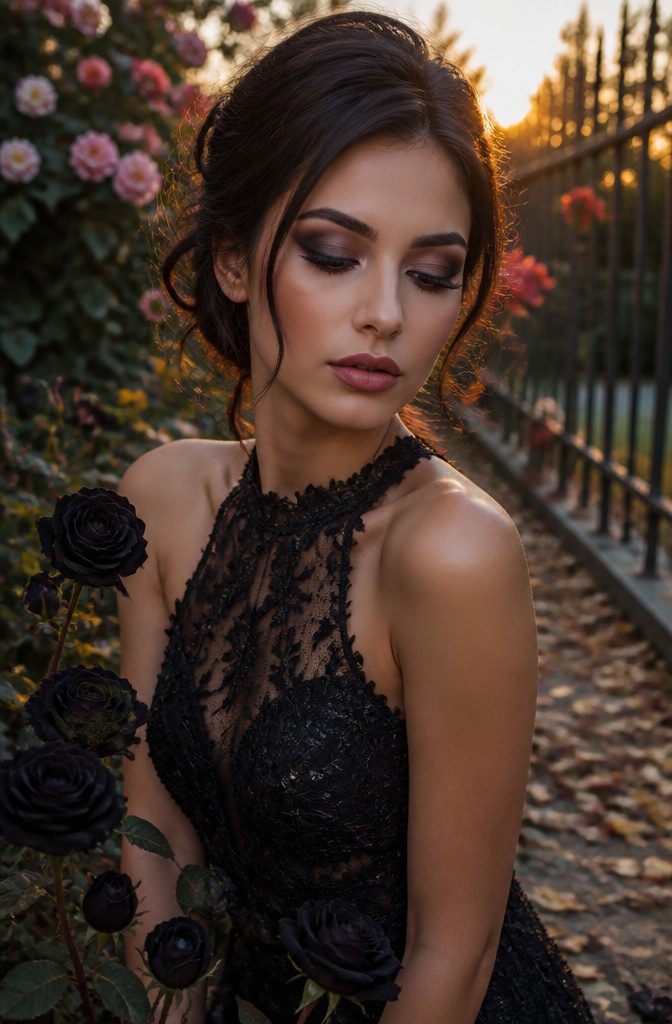
Petals drawn onto the crease with a fine brush give this look its name, and the shape matters more than the color intensity.
You lay down the black in thin strokes that arc upward at the outer corner, then soften every edge until the lines read as folded petals rather than stripes.
I’ve watched tutorials where the contrast stayed too sharp and the effect looked more like a graphic wing than anything botanical; the difference is whether you spend the extra two minutes buffing with a clean brush.
Black works here as contour more than spotlight. The deepest tone sinks into the socket line to create depth, while a mid-tone rose or dusty mauve fills the lid center and a pinpoint highlight catches the inner corner.
That layering is what keeps the look wearable past midnight: the black recedes rather than announces itself, which means this reads as moody romance at a dinner date or a winter wedding without tipping into costume.
Skip it for high-noon events; the dimensional shading needs low light to show properly, and bright sun flattens the whole thing into gray smudges.

Eye shadow brushes. Making eye color glide onto your eye lids or under eye "smudging" very effortlessly.
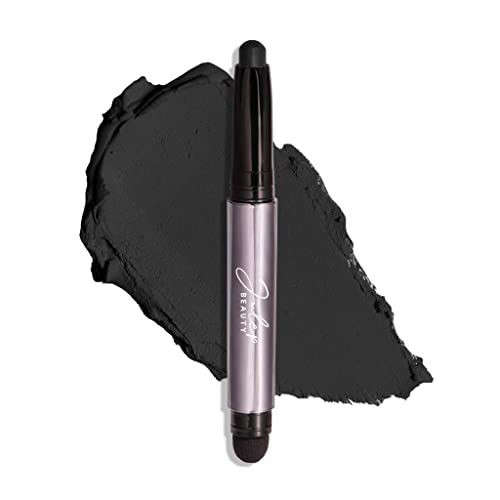
CREAM-TO-POWDER FINISH THAT SETS BEAUTIFULLY: Glides on as a silky cream for smooth, even color finish, then dries to a weightless matte powder that resists creasing all day for a clean, precise, and perfectly airbrushed eyelid look.

Eyeshadow glides on evenly: oval tips are made of soft latex sponge, very comfortable to touch; Non-toxin, good sanitation, good applicator for makeup
9. Simple Smoked-Up Cat-Eye

A cat-eye drawn with shadow instead of liner is the easier way to get the shape without the stress of a liquid wing.
I press a small angled brush dampened with setting spray into black shadow and stamp the flick at the outer corner, then build it in soft circular motions toward the temple.
The edge stays blurry by nature, so there is no hard line to perfect.
For hooded eyes, the placement shifts up. The flick lands slightly above the natural crease so the shape stays visible when the eye is open.
Keeping the lid itself lighter and concentrating depth in the outer V stops the look from disappearing into the fold. Blend the shadow back and forth, not up, or the lift collapses into a smudge.

It's 100% opaque and ultra-creamy texture easily traces precise and intense lines in just one passage with a completely budge-proof finish

36 Hour Wear: NYX Professional Makeup Epic Wear Liner Sticks are powerfully pigmented eyeliner pencils that deliver 36 hours of waterproof, smudge proof, and fade proof eyeliner color; It's perfect for waterproof all day and night graphic eyeliner looks

Long lasting, pigment rich brown color
10. Defined Cat-Eye
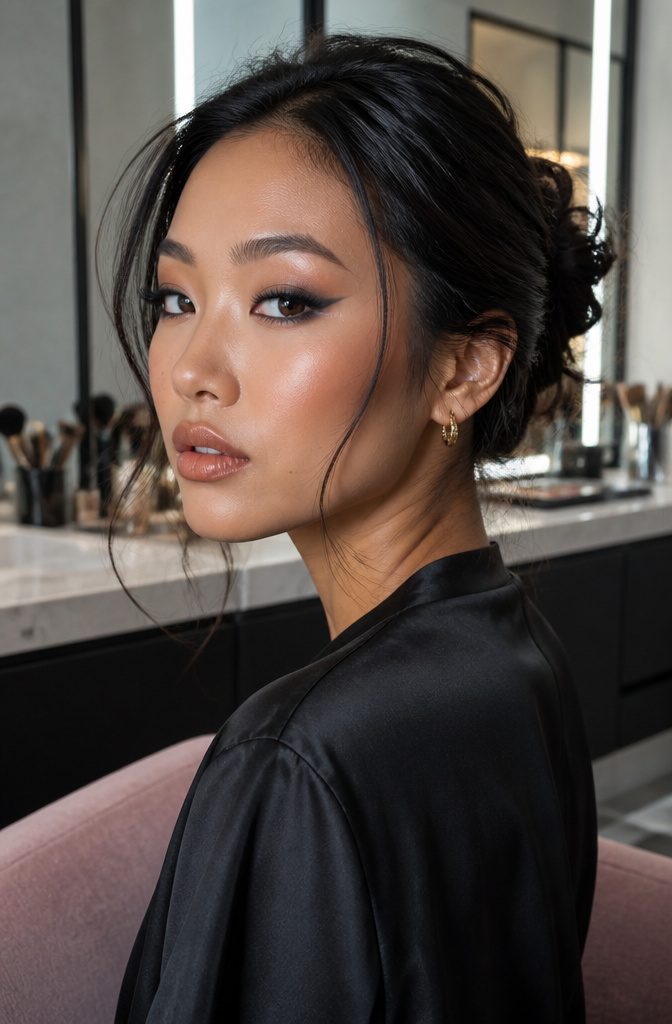
A defined cat-eye reads differently than a smoked-up version because the edges stay sharp and the shape stays intentional.
Dampening the shadow makes the difference: a wet angled brush lays down pigment closer to a liquid line, giving you the precision that reads as formal rather than after-hours.
Two routes work here, and the look you want determines which to pick. Start with black shadow dry as a template, sketching the wing before you commit to cream or liner on top.
That is the forgiving path, and it lets you adjust the angle while the color is still blendable. The other route keeps the shadow itself as the final line, pressed on with a damp brush for definition that holds.
A pearlescent white at the inner corner opens the eye against all that black and keeps the look from closing in on itself, though a soft gray works if pure black feels too forceful for the occasion.
Circular blending toward the outer corner builds depth without sacrificing the clean edge. A tapered brush keeps the shape controlled; anything fluffier starts the drift into smoky territory that this look is trying to avoid.
The edge is the point. Keep it sharp enough to read from conversation distance, and the whole face looks more deliberate.

【Classic Eye Shadows Collection Pallet】A compact, travel-size eyeshadow palette contains 40 basic ultra-versatile warm and cool neutral shades - including yellow, gold, orange-ish brown,rosy pink to purple,taupe,earthy brown,white,grey,silver and charcoal black - featuring a pigmented mix of finishes from velvety matte and satin to pearly shimmer and dazzling metallic glitter.

BEPHOLAN Single Matte Black Eyeliner and Eyeshadow Palette,Cake Eyeliner Powder Goth Makeup Eyeshadow, Black Gothic Vampire Blood Makeup,Black Rose

Highly pigmented eyeshadow with instant, intense and buildable colour release
11. Half-Smoked Black With Multi-Colors

Black eyeshadow looks lend themselves to splitting the lid in half when you want drama without closing the eye off completely.
The workable version keeps black concentrated on the outer half, brushed inward just far enough to read as smoky without swallowing the whole lid, while a brighter shade sits on the inner portion or climbs through the crease.
What convinced me, reading through a dozen of these tutorials, is how explicitly the backstage artists frame this as a safety move.
M.A.C. senior artist Michelle Clark builds her "black velvet" around exactly that tension: matte black pressed into the inner and outer corners, deliberately kept away from the center, so the eye keeps its open shape.
Deney Adam at Ulta Beauty pushes the black farther across the lid but still breaks it with a light shimmery tear-duct highlight that does the same work of keeping the eye alive.
Color pairings tend toward the metallic and the cool. L’Oréal’s pro team uses silver lid sticks as the counterweight, melted across the empty center space and blended where the black crease shadow meets it.
The rmsbeauty approach keeps the color more restrained, a small amount of black powder limited to the outer third and crease, letting your own lid tone do the rest.
Either way, the gradient is what sells it: a fluffy brush softened across the boundary until you cannot name the exact millimeter where black ends and color begins.
Where it fails is skipping that blend step. The half-smoked look lives or dies on the seam.
12. Glittery Smoky Eye
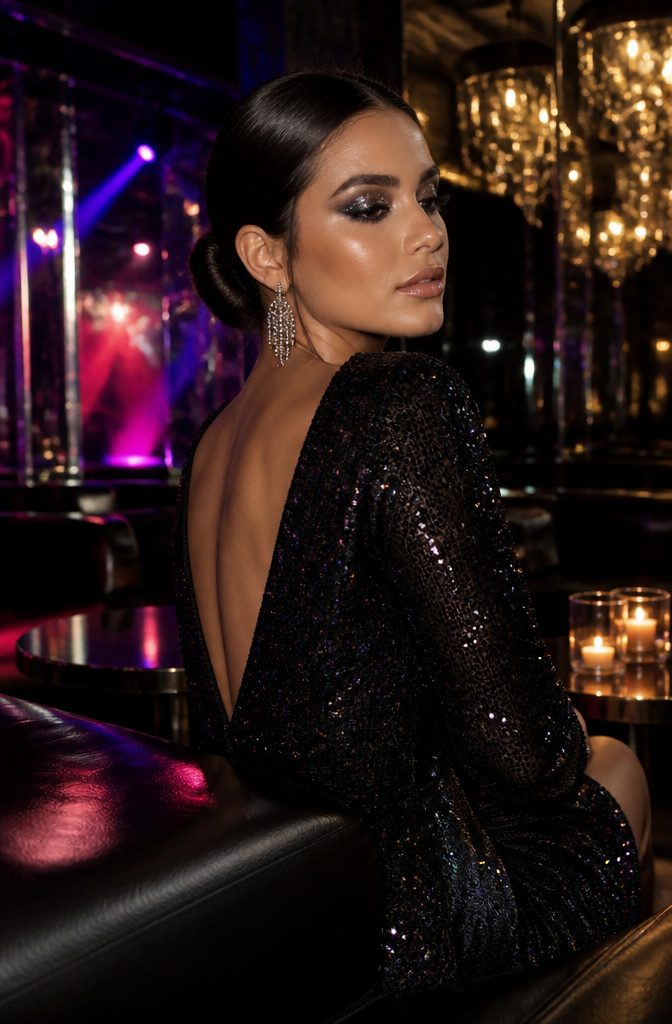
Glitter over black reads entirely different from shimmer or metallic finishes, and the difference is worth getting right. Shimmer catches light across a smooth, even surface.
Metallic lays down like foil. Glitter sits in discrete particles that need something to grip, which is exactly why a smoked-out black base matters.
Erin Parsons builds hers from eyeliner, smudging Uoma Beauty’s Afro.Dis.Iac Cleopatra Liquid Ink Eyeliner into a sheer wash that travels up the lid.
That tacky, diffused layer gives glitter something to hold without sliding into a single reflective sheet.
Fallout is the real enemy here. Tap the brush hard before you touch your face, and always do eyes before foundation so you can wipe stray particles away without ruining the rest of your look.
Creamier formulas help, but the physics of glitter means some fallout is almost guaranteed. The cleanup step is built into the timeline, not an afterthought.
The payoff is texture with actual dimension.
Where metallic flattens the lid into one bright plane, glitter over smoked black keeps depth at the lash line while the particles throw light at different heights. It reads as three-dimensional in a way that reads expensive, not just shiny.
13. Edgy Smoky Dark Eyeshadow

The edgy smoky eye pushes higher and spreads wider than the everyday version.
Where a standard smoky shadow stops at the crease, this one travels past it toward the brow bone, with black blended so far upward it nearly meets the arch.
A matte black shadow patted across the lid and into that upper zone frames the eye in one continuous wash rather than a contained shape.
The lower lash line gets the same heavy treatment, with shadow smudged out to meet the upper wing for a connected, almost mask-like effect.
Paired with strong brows and a clean or dark lip, the look reads deliberate rather than slept-in. Kohl liner drawn winged and softened while still workable sets the shape before the shadow goes on.
This is strictly a night option.
The distortion of proportions, the overtaking of lid real estate, and the deliberate harshness all rely on lighting that flatters drama. Daylight turns the smudge into a smear; candlelight turns it into intent.
14. Bedroom Eye

A bedroom eye lives and dies by placement right on the lid, not by how much shadow you pile on.
M.A.C Carbon Eyeshadow applied across the lid and blended up through a transition shade gives that soft, slept-in depth where the color sits close to the lash line but never looks like a mask.
What tightlining with black shadow does is fill the gaps between lashes so the line itself becomes almost invisible.
The result is fuller-looking lashes without a stripe of pigment riding above them. For this, dampen a powder brush and press it into the shadow, then use the top edge to work the color directly into the upper lash line.
The edge stays slightly smudged, blurred at the perimeter, which is exactly the point.
A pencil or liquid liner would read too deliberate. Shadow gives you the definition without the precision stress, and the blur catches light the way a hard line never would.
Keep the color to the outer third if you want to test the shape before committing. The heavy-lid version works, but the subtler take is often the one that survives daylight.
15. Smoky Base

A black base turns everything layered over it into something richer than the color alone could manage.
Myiesha Sewell, beauty director at Sephora, builds every smoky eye she does on black first. The black creates the depth and drama; anything on top reads as that color intensified rather than as a flat wash sitting on skin.
Sewell reaches for cream shadow, not powder, when she wants that base to grip. Cream acts as a magnet for pigment layered over it, so the color builds without repeated dipping.
It also solves a problem flash photography creates with traditional shadow. The cream base won’t blow out under camera light the way powder can.
Erin Parsons, global makeup artist for Maybelline, works similarly but starts with liner. Moisturizer on the lid first, then liner pressed close to the lash line and smudged upward with a brush until it sheers out into a wash.
That faded gradient is where the magic happens; metallic shadow or glitter laid on top looks finished rather than floating.
The black underneath contours the socket without announcing itself, and the eye reads as dimensional even when what you actually see is the top layer’s shimmer or color.
16. Bold Definition

A dampened angled brush turns black shadow into the sharpest tool in the kit.
Water pressed into the bristles before dipping intensifies the pigment enough to draw a clean lash line or carve a precise crease, and the finish stays softer than liquid liner while outlasting most pencils through a full day.
That precision is what separates defined looks from the smoked-out versions everyone defaults to. Smudged edges have their place, but a blurred line reads as "evening" by default.
A tight, dark stripe along the upper lashes or a controlled crease contour reads intentional at 9 a.m., and the control is easier than it looks: the damp brush does half the work, depositing color exactly where you set it down.
Celebrity makeup artist Robert Sesnek uses black shadow as a template before committing to cream or liquid liner, mapping the wing shape first so the final line has a guide to follow.
The same damp-brush method works alone for definition that holds without the hardness of traditional liner, especially along lower lashes where liquid can pool or pencil can wander.
The tradeoff is in the edge. Where smoked looks forgive a shaky hand, defined lines reward patience and a steady surface.
Rest an elbow on a vanity, breathe out before the stroke, and build the line in thin passes rather than one heavy drag. The pigment stacks; mistakes do not erase cleanly once the water sets the shadow.
17. Deeply Monochrome Dark Eyeshadow
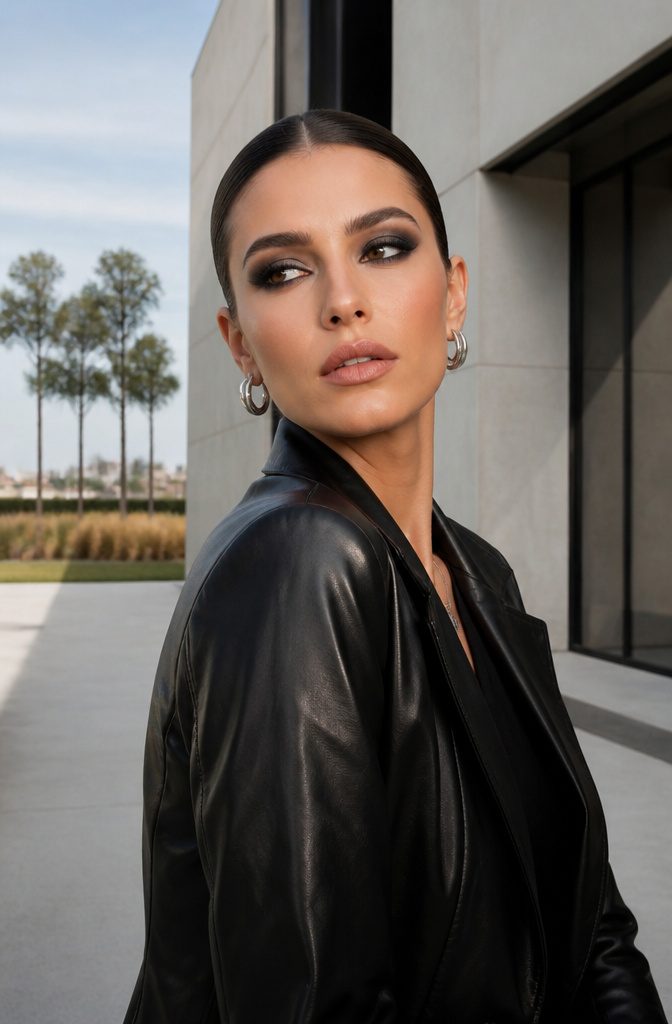
A full black eye can read as costume or editorial on camera, but the same matte-satin-shimmer gradation in charcoal to jet turns sophisticated in person.
Skin tone decides how deep the black family needs to go. Fair skin with cool undertones flattens against straight jet black; that range reads skeletal rather than dramatic.
The workable fix is staying lighter within the family, charcoal at the outer V and a soft gray at the inner corner, nothing approaching true black on the lid itself.
Deeper skin carries the same gradation but can anchor sheer jet black on the outer third without the same draining effect.
The formula texture matters as much as shade: matte gives the architectural shape, satin in the crease catches enough light to keep the eye from closing in, and a controlled shimmer at the inner corner is what separates a polished monochrome look from stage makeup.
18. Halo Smoky Dark Eyeshadow
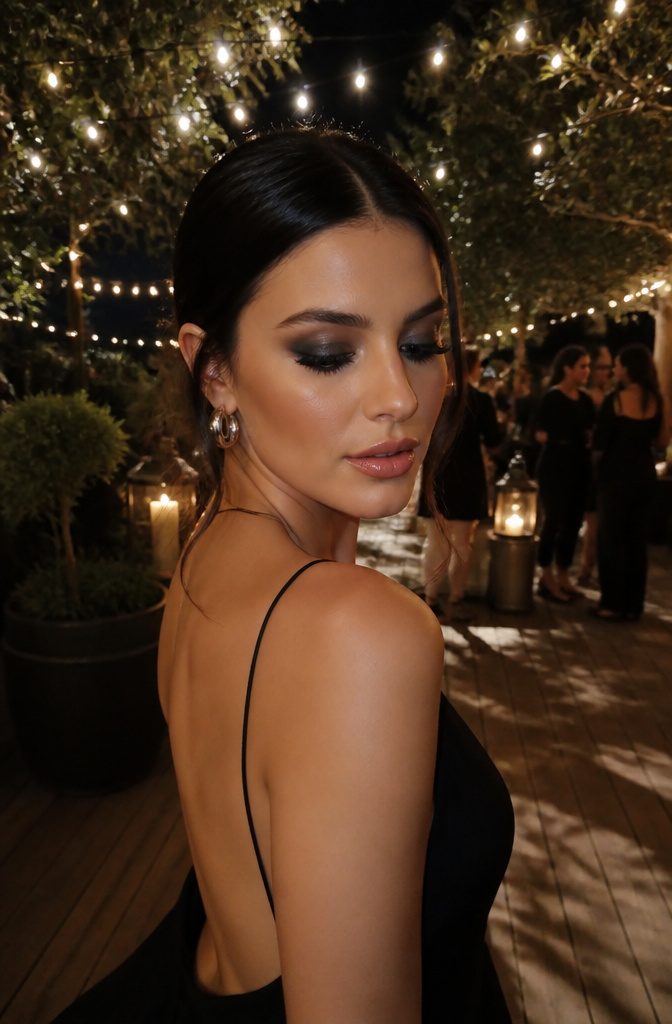
Black on the inner and outer lid with a lighter shade pressed into the center creates a halo effect that opens up the eye rather than flattening it.
The trouble starts where the two tones meet: a hard boundary kills the whole illusion.
Blend the edges between zones until no line is visible when your eye is relaxed, which usually takes three or four passes with a clean brush per transition rather than one aggressive swirl.
I spent longer than I’d care to admit treating the center spotlight as an afterthought, wondering why my results looked bruised instead of bright.
The lighter shade needs to sit in a visible arc, not a pinpoint, and it needs to be pressed on after the black is already blended outward, not swept through it.
A fingertip deposits more pigment there than a fluffy brush will.
The outer corners demand the most patience.
Black pool there naturally, and without deliberate softening, the halo collapses into two disconnected smudges. Work in thin layers: pigment first, then a clean brush in small circles, then more pigment only if the saturation dropped too far.
19. Traditional Smoky Dark Eyeshadow

The darkest pigment belongs right at the lash line, lightening as it climbs toward the brow bone. That gradient is the first technique most beginners learn, and it is still the backbone of a reliable evening eye.
Makeup artist Laura Lujan builds it by starting with a dark matte black liner tight to the upper and lower lashes, then smudging outward with a brush so the color stretches toward the crease.
A medium or deep matte shadow sets the liner, and a clean brush softens the edges until they fade into skin tone. The result frames the eyeball rather than sitting on it like a stripe.
Modern smoked variations tend to diffuse black outward in hazy, undefined shapes, sometimes blown clear past the socket. The classic version keeps its structure: dense at the root, controlled as it rises, never losing its anchor to the lash line.
Shelby Wax at L’Oréal Paris notes that black’s neutrality across skin tones makes the look forgiving, but the technique matters. Skip the careful layering and blending, and intensity collapses into a bruised smudge.
20. Color Clash Dark Eyeshadow
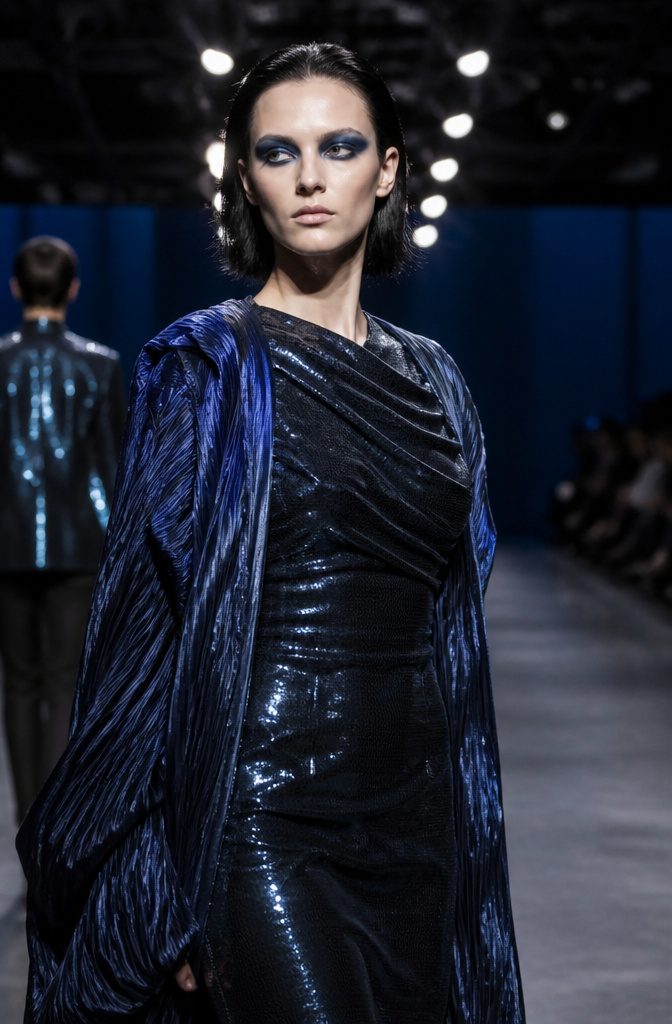
A strong iridescent blue sitting clean against black shadow reads as straight-up rebellion, and that is the whole point of this look.
The framework gets built with your darkest shades, then the contrasting color lands on the center of the lid and gets blended outward and upward for something closer to editorial than everyday wear.
MUA Quinn Murphy builds the shape first with a punky cat eye edge and floats the diaphanous color over top; the black gives structure so the blue or teal or acid green can stay in its lane without muddying down.
The clash works because the black does the heavy lifting, not the bright.
Cream shadow underneath changes everything here: it acts as a magnet for powder color layered on top, so you build the intensity in two passes instead of six.
Myiesha Sewell at Sephora swears by this for camera-ready results, since flash photography does not blow through cream the way it can with traditional shadow. Powder on bare lid fights you; cream underneath gives the blend somewhere to grip.
This is statement wear, full stop. Save it for the occasions where looking like you follow rules would actually be the mistake.
Frequently Asked Questions
Is black eyeshadow suitable for daytime wear?
Yes, with a light hand and matte formulas. Keep the application soft, pair with nude lip and barely-there cheek, and let the edge blend into your skin tone rather than stopping at a hard crease line.
The Au-So-Natural section specifically covers how to make it work before 5 p.m.
How do I prevent fallout with dark shadows?
Tap your brush hard before touching your face, and always do eyes before foundation so cleanup is simple.
Creamier formulas like Black Magic also help sidestep the problem, and pressing shimmer on with a finger instead of a brush keeps particles flat rather than dusty.
Can I use black eyeshadow if I have hooded eyes?
Yes, shift the placement upward. For cat-eye shapes, stamp the flick slightly above your natural crease so it stays visible when your eyes are open.
Keep the lid itself lighter and concentrate depth in the outer V to prevent the look from disappearing into the fold.