The right makeup look for green eyes depends on whether you want to amplify the warm amber flecks or push the color toward electric contrast.
Warm bronze and copper shadows pull forward the gold threads hiding in most green irises, while purples and burgundies sit opposite green on the color wheel and sharpen the color by pure opposition.
The trick most people miss is that olive shadow, despite seeming obvious, can flatten green eyes into mud unless you break it with gold at the inner corner.
1. Neutral Cat Eye

Matte nude shadow keeps the competition off your green eyes while a thin, crisp wing still gives the shape some architecture.
The L’Oréal Paris Paradise Le Shadow Stick in Alluring Rose is the only tool I keep reaching for here: one swipe across the lid, blend with a finger, and the base is done without dusting loose pigment onto your cheekbones.
The liner is where most of us overdo it.
A tightline along the upper waterline defines the lash line without drawing a stripe that fights the iris for attention. Lift the lid gently, run the pencil between the roots, and the eye looks wider and more awake.
The outer flick, if you want one, stays thin and angled upward with the L’Oréal Paris Grip Precision Felt Waterproof Eyeliner; the 0.4mm tip forgives a shaky hand. Mascara on the top lashes only keeps the finish clean.

CREAM-TO-POWDER SHIMMER FINISH WITH ALL-DAY HOLD: Starts as a silky, pigment-rich cream and sets to a luminous shimmer powder that stays crease-free and fallout-free —delivering glowing, dimensional shimmer lid color that truly lasts.

✦MATTE AND SHIMMER COLORS: Both matte shadows and shimmers have velvet creamy texture in range of metallic, satin, and matte finishes. Each color is unique, easy to layer and blend. You can use base primer for better application. If you get a damaged eyeshadow palette, please feel free to contact us for a best solution.

CREAM-TO-POWDER SHIMMER FINISH WITH ALL-DAY HOLD: Starts as a silky, pigment-rich cream and sets to a luminous shimmer powder that stays crease-free and fallout-free —delivering glowing, dimensional shimmer lid color that truly lasts.
2. Bronze Smokey Eye

Warm bronze tones pick up the amber and gold threads that run through most green irises better than cool shades ever manage.
I learned this the hard way after years of reaching for silvers and grays that left my eyes looking flat, until a makeup artist stopped me mid-swatch and handed me a copper penny shadow instead.
The change was immediate: the tiny hazel flecks I had barely noticed suddenly looked lit from behind.
Build this from the lid upward.
A bronze shimmer across the entire lid catches light and draws focus straight to those warm undertones. Press it on with a flat brush rather than sweeping, so the pigment stays dense where you want it.
Then blend a matte deeper brown through the crease and slightly past the outer corner, keeping the motion upward and outward so the shape lifts rather than drags.
The contrast between the two finishes, shimmer against matte, creates the depth that makes this read as smoky rather than just metallic.
For the lower lash line, smudge the same bronze shadow along your lashes with a small pencil brush. Skip the waterline if you want this softer, or add brown liner there for more definition.
Two coats of a volumizing mascara finish it. The L’Oréal Paris Paradise Le Shadow Stick in Magnetic Bronze layered under Brown Abyss is the pairing that convinced me cream formulas can actually blend without tugging.

Bold Color: Highly pigmented, rich color for eyes, cheeks and lips

6-pan set of leveled-up, pressed pigment eyeshadow powder creates buttery, high-intensity shadows for major color payoff with minimal fallout

Easy-to-wear shades. All-day wear.
3. Soft Mauve Wash

Mauve sits between purple and pink on the color wheel, and that middle position is what makes it wearable before 5 p.m.
It carries enough warmth to avoid the bruised look cooler purples can give, enough coolness to keep pink from reading too sweet.
For green eyes, the effect is subtle but definite: the red undertone in mauve bounces back intensity without the high drama of a true berry or wine.
A single swept color is the whole technique. Load a fluffy brush, sweep it across the lid, and blend the edge upward until the color dissolves into skin.
No crease work, no outer-V definition, no second shade required. Done right, the finished look takes under two minutes and still registers as intentional.
The soft, romantic touch comes from the blur itself.
Hard edges turn mauve into makeup; soft edges turn it into a flush that happens to land on your eyelids. A light shimmer or champagne tone tapped on the inner corner catches light and keeps the eye from looking sunken.
Brown mascara finishes it softer than black would, which is the point of a daytime wash. Save the pigment for after dark.

Effortless Application: Enjoy the smooth texture of this eyeshadow stick that blends easily with fingertips - no brushes needed. Suitable for quick morning routines, travelers & those with mature skin or sensitive eyes. The beginner-friendly cream eyeshadow glides on evenly without tugging or creasing

High quality individual sized eye shadows in matte, metallic and pearl shimmer finish ethically formulated to sit comfortably on the eyelid and provide a smooth finish with a soft, creamy feel.

☘️Ultra-Pigmented Eyeshadow: Our high quality black green naked eyeshadow palette has intense color payoff, velvety and silky feeling, easy to apply and blend. You'll get intense, flared, visual effects. Perfect for green/hazel eyes. The delicate 3D snake pattern makes this eyeshadow palette even more charming and suitable mother's day gifts for mom!
4. Olive and Gold Gradient
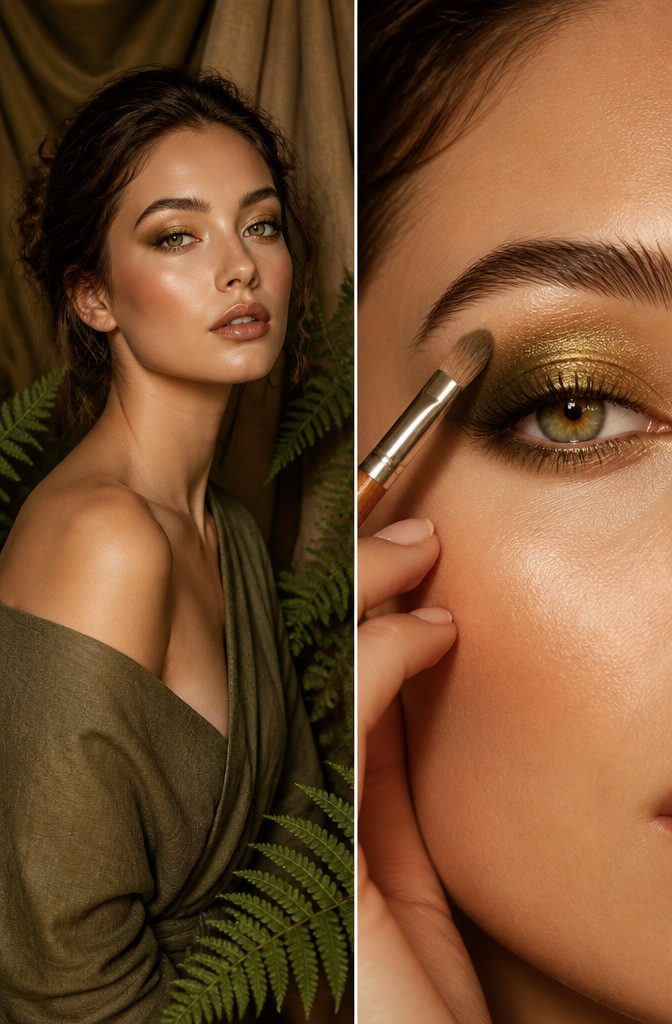
Olive shadow can flatten green eyes into mud if you wear it all over the lid: the color matches too neatly and the eye itself disappears into the general green wash.
The gradient fixes this by borrowing earth tones that sit near green on the wheel without meeting it exactly.
Darkest olive pressed tight against the lash line gives depth, then gold lifting toward the brow bone keeps the brightness above the iris so the eye color reads as the source of the scheme rather than matching it.
L’Oréal Paris Infallible 24 HR Eye Shadow in Golden Emerald handles the mid-tone perfectly, and the formula stays put through a full day without creasing into that oily line that ruins gradients by three o’clock.
Work darkest olive into the outer corner and lower lash line, diffuse it upward, then tap a shimmery gold like Eternal Sunshine into the inner corner and center lid.
The gold does the lifting; the olive does the grounding. Your green becomes the reason for the look, not the color that got lost inside it.

ALL-DAY WATERPROOF WEAR: Smudge proof, transfer proof, fade proof gel eyeliner pencil stays put for up to 10 hours without smearing or fading, for long lasting, definition day or night.

INTENSE COLOR PAYOFF: The essence Stay & Play Gel Eyeliner is your go-to for vibrant, eye-catching looks. Its highly pigmented gel-like & super soft formula glides effortlessly over the eyelids, delivering bold and captivating color that won't go unnoticed. Get ready to make a statement!

The Perfect Wings Everytime – Eye liner wings have never been easier. Line up the stamp from the corner of your eye to the end of your eyebrow to create the same wing on each side. The curve in each stamp eyeliner provides a quick natural cat eye look
5. Lavender Lids
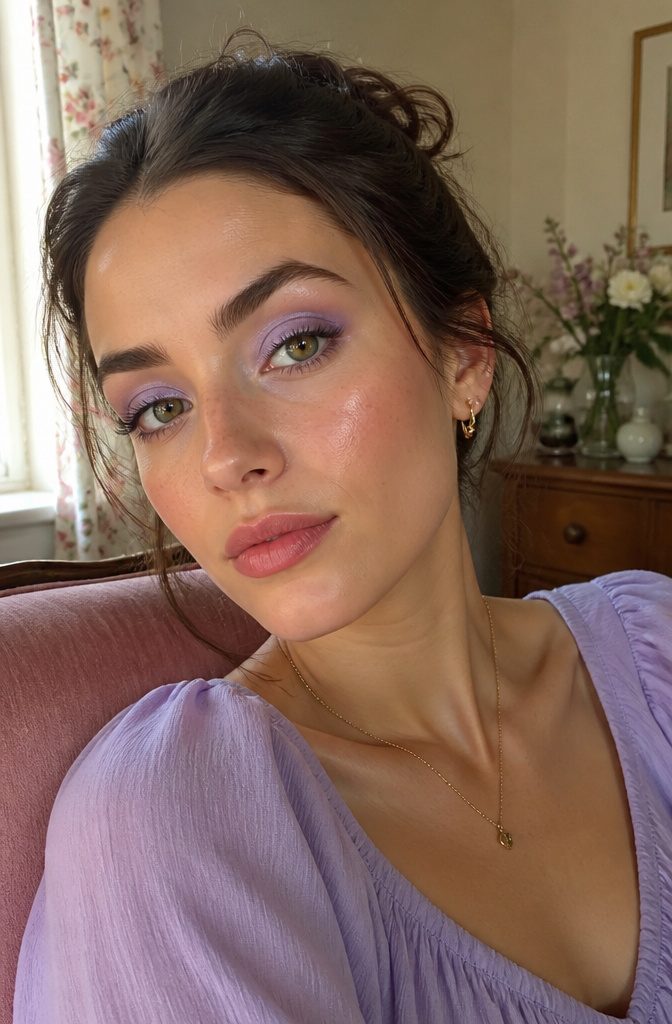
Purple sits almost opposite green on the color wheel, which is why lavender shadow makes green eyes read sharper and brighter without any contrast tricks beyond the color itself.
The danger comes in choosing the wrong depth. A heavy hand pulls it toward costume territory fast, and the fix is keeping the lavender sheer enough that light passes through it.
Keep the color across the mobile lid only, stopping short of the crease so the purple floats clean against neutral skin. The moment it climbs upward, the shape competes with the color and the whole thing looks muddy.
Blend the edges to nothing at the lid line, not into the socket. A silvery shimmer tapped at the inner corner wakes the whole look up without demanding a second shade elsewhere on the eye.
Plum liner, thin, can finish it, or skip liner entirely and let the lid color carry all the weight.
Either approach works; the wrong move is treating sheer lavender like a base you build on. It is the statement already.

Voluminous Million Lashes Mascara has a revolutionary collagen-infused formula and Millionizer Brush for amplified volume and definition

Lengthening Mascara: Enhance your lashes with intense length and unique lash-by-lash separation; Ophthalmologist tested and allergy tested; Suitable for sensitive eyes and contact lens wearers

+5MM Lash Lift Effect: This volumizing mascara instantly elevates lashes to be so curled and extended they appear up to 5MM closer to your brows for a bold, eye-opening look
6. Copper Sparkles

Charlize Theron’s copper sparkle moment at CTAOP’s Night Out 2021 paired a metallic lid with a red lip, and the reason it worked so well comes down to how copper amplifies the warm undertones already present in green eyes.
Placed shine beats all-over glitter when you want the effect to read as expensive rather than festive.
A full lid of sparkle reflects light everywhere and flattens the eye’s shape; a deliberate accent at the center of the lid catches light only where the eye bulges naturally, creating dimension without the mess.
Charlotte Tilbury’s Eyes to Mesmerise in Sunlit Glow or Rose Gold delivers that metallic sheen with a formula that dries down and stays put, which matters more with shimmer shades that otherwise migrate by noon.
The cream texture means you can tap it on with a finger exactly where you want it and stop there, no brush required.
Charlotte Tilbury’s Eyes to Mesmerise delivers serious metallic sheen and sparkle and dries down for great longevity. The shades Sunlit Glow or Rose Gold will really make green eyes pop.
That staying power is the difference between a look that lasts through dinner and one that ends up on your cheekbones by dessert.
Tap, don’t sweep, and keep the rest of the lid matte so the copper has somewhere to land.

100% clean vegan formula free of talc, mineral oil, paraben and fragrance
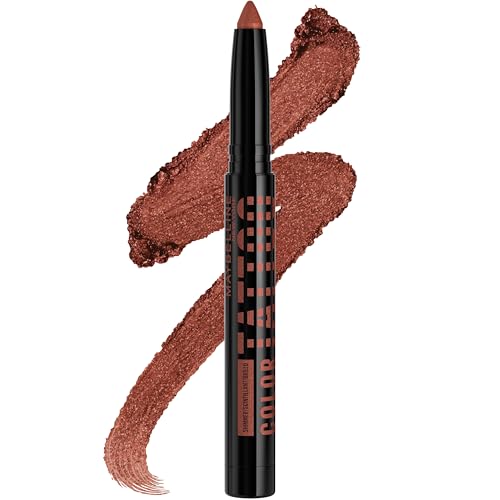
All-in-1 Eye Shadow, Eye Liner and Eyeshadow Primer: Maybelline’s Color Tattoo Eye Shadow Sticks deliver 24HR tattoo performance for all day wear in a multi-use stick. It primes, defines, lines and highlights lids with ease

Molten Copper Radiance – Rich copper, amber and golden shimmer blend together to create a sophisticated metallic eye look with subtle multidimensional reflections.
7. Burgundy Lashes
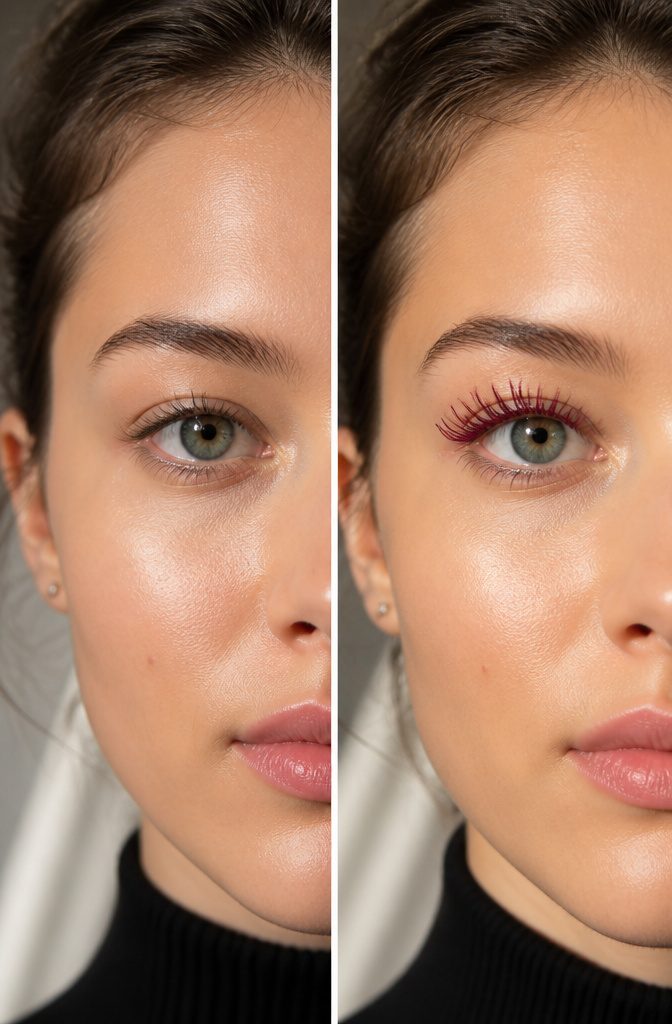
Burgundy mascara is how I ended up wearing color on my lashes for the first time in ten years. The reddish-purple tone sits opposite green on the color wheel, so the contrast reads as intensity rather than costume.
The Lancôme Lash Idôle Mascara angled brush builds volume in two coats without clumping, which matters because colored mascara that looks thin reads as an error, not a choice.
I use the wand’s curve to press color against the base of the lashes, then wiggle upward.
Placement changes everything. On the upper lashes alone, burgundy registers as a warm black in most light and only reveals itself in direct sun.
On the lower lashes only, the effect is deliberately offbeat; the asymmetry draws the eye down and widens the gaze.
Both lashes together commits fully and works best with otherwise minimal makeup, since two lines of wine-toned lash can fight a complicated lid.
I skip colored mascara on the lower lashes when my skin is tired; the contrast pools attention under the eye.
Both lashes, though, on a good skin day with nothing else but tinted moisturizer, gets the compliments that black never did.

CREAM-TO-POWDER SHIMMER FINISH WITH ALL-DAY HOLD: Starts as a silky, pigment-rich cream and sets to a luminous shimmer powder that stays crease-free and fallout-free —delivering glowing, dimensional shimmer lid color that truly lasts.

【Smoky Purple Color for Mature Beauty】A chic blend of dark purple and brown, this sophisticated eyeshadow flatters mature skin and enhances green or hazel eyes. It adds subtle depth and elegance without harshness—perfect for refined everyday makeup

Vibrant Color Range: MEICOLY offer a diverse range of shades for eyeshadow,including beige eyeshadow,white eyeshadow,black eyeshadow,light blue eyeshadow,green eyeshadow,coffee eyeshadow,red eyeshadow,macaron grey eyeshadow,catering to various preferences and allowing you to find your perfect match.Gently remove the sealing film from the mirror before using the eyeshadow.
8. Cobalt Eyeliner
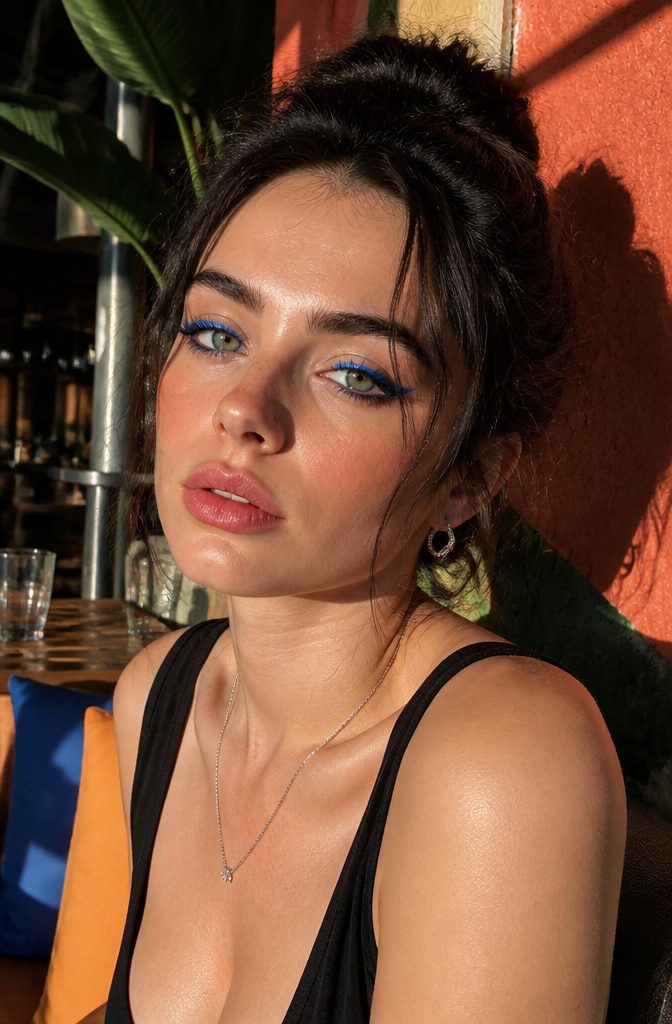
Cobalt reads louder against green eyes than navy ever dared. The trick is placement.
On the upper lash line, it frames the iris and pushes the green toward yellow-gold without trying to match it. On the waterline, the effect flips toward costume unless the rest of the face stays bare.
Black liner would flatten this, absorbing the contrast that makes green eyes read as green in the first place. Cobalt does opposite work: the cool blue bounces light back so the eye color keeps shifting as you move.
One line, pressed close to the lashes, is usually enough. Two passes, and the look starts shouting.
I learned this watching a makeup artist trade her kohl for a pencil the color of a Sinai sky.
The model’s eyes looked less made-up, not more, because the blue wasn’t pretending to be natural; it was doing something natural shadow never tries.

EFFORTLESS APPLICATION & BLENDABILITY: Experience a creamy texture that glides on effortlessly without tugging. This cream eyeshadow stick allows you to swipe, blend, and go in seconds. Suitable for quick morning routines or on-the-go touch-ups, the formula blends seamlessly using just your fingertips, eliminating the need for complex brushes

【Dynamic Multichrome Color Shifting Effect】Each chameleon eyeshadow boasts an amazing holographic color shift performance. The base shade transforms into stunning iridescent hues as you change angles and lighting, delivering a vivid multi-dimensional glow that stands out in natural light and indoor light. With rich gradient shades from silver pink, champagne green to purple black and midnight blue, it creates a dreamy high-end eye look for every style.

【5 Wearable Shades – Matte & Shimmer】 This 5 color eyeshadow palette includes a balanced mix of matte and shimmer shades in wearable nude, taupe, brown, bronze, olive, and rose-inspired tones Each colorway is designed for everyday natural makeup, soft glam looks, and easy smokey eye styles
9. Silver and Charcoal Smokey Eye
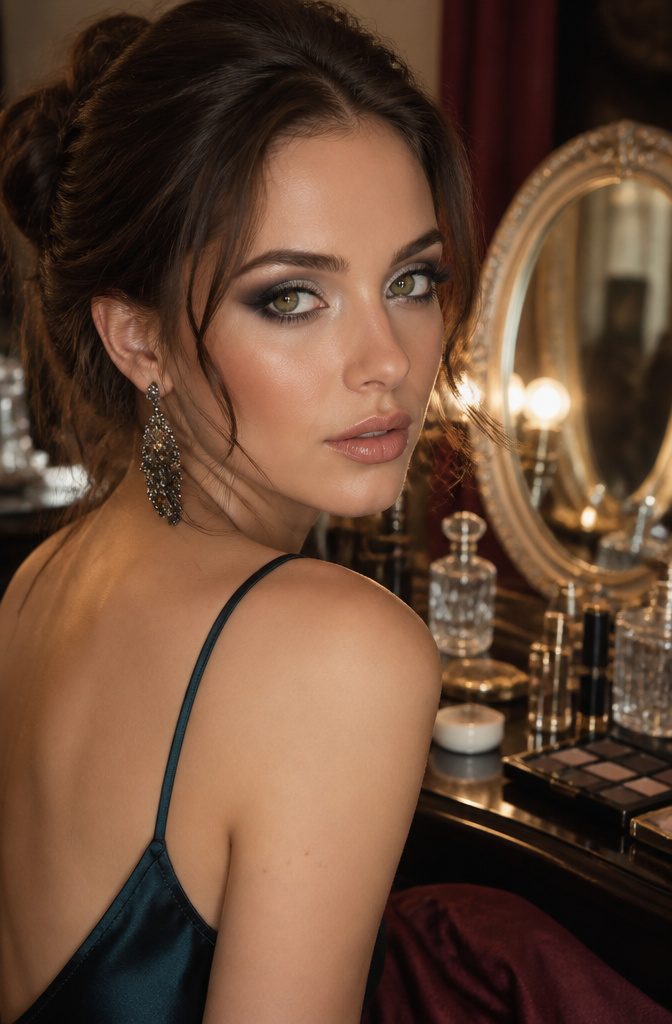
Metallic shades in the platinum family do something to green eyes that bronze never quite manages: they pop the iris forward by cool contrast instead of harmonizing with it.
The mistake I used to make was treating silver and charcoal as a single wash and ending up with a flattened gray lid that betrayed every hour of bad sleep.
Silver stays at the inner corner and the center of the lid; charcoal owns only the outer third. That placement keeps the dimension alive.
Warm shadows forgive a sloppy blend because the tones melt into each other like natural skin depth, but cool tones can slip into muddy territory fast if the edges aren’t worked with a clean brush between layers.
I build the silver first, press it in with a finger for density, then sweep charcoal through the outer V with a small crease brush and blow the seam outward in tiny circles until no obvious line survives.
A tightline of matte black liner against the upper waterline finishes it, which is where the definition lives without competing with the metal.

Cream Waterline Eyeliner Pencil - Waterproof gel eyeliner pen with built in sharpener, intense, creamy color glides on as effortlessly as a liquid liner with the control and staying power of a pencil. Our eyeliners are gentle, and safe for sensitive eyes of older women plus. Fearless of rain, humidity, sweat and tears, it lasts all day long!

All-in-One Tapered Gel Eyeliner Pencil Set: This versatile set features three rich matte shades: Classic Black, Soft Brown, and Berry Wine. The unique tapered tip allows for precision, letting you create anything from a subtle thin line to a bold, dramatic wing. Beyond eyeliner, its blendable formula doubles as eyeshadow, eyebrow filler, lip liner, and even face art crayon. One set unlocks endless creative possibilities for your entire makeup look

【Cost Effective Eyeliner Set】Three colors of makeup eyeliner set, 3 different colors of super color eye shadow pen can help you design different charms.
10. Rose Eyeshadow

Rose sits closer to purple than true red on the color wheel, but carries enough warmth to avoid cooling down the green.
That warmth matters: it reads as a flush on the lid rather than a shadow, which keeps the eye looking open and intentional.
Mauve pulls the same purple-adjacent trick, though it leans cooler and softer, almost like a bruised tone. Rose has more intention behind it.
You notice rose; mauve just hovers. For a bolder statement, a true blue-red lip like Dior’s Rouge Dior anchors the look without competing.
The contrast between that lip and a soft rose eye is what makes it work for evening without asking you to paint on a full smoky lid.
- Perfect for Short Fine Lashes: With a Microscopic wand brush Adjustable to any angle, our tubing mascara effortlessly coats every individual lash – even the tiniest and shortest ones – from root to tip, giving you a full and voluminous look.

COMPLEMENTS SMOKEY EYE MAKEUP: Volumizing mascara provides high drama, bold lashes that pair perfectly with a smokey eye.

24-hr flake-free, smudge-proof & longwear for life-proof lashes that last all day!
Best Colors for Green Eyes

Green eyes sit on only about two percent of the global population, so the color you sweep on matters more than it does for the roughly eighty percent with brown.
That rarity reads as distinctive the second someone looks up, and the wrong shade wastes it.
Warm tones like bronze, copper, and burgundy are where I start most mornings with this eye color. They catch the gold and amber flecks that live in green irises and pull them forward without trying too hard.
A copper wash across the lid with a deeper bronze pressed into the outer corner does the work of "interesting" without reading as effort.
Purple lands differently.
Since violet and green sit nearly opposite each other on the color wheel, the contrast does the heavy lifting. Plum smudged along the lash line or lavender washed through the crease makes the green read sharper, almost electric, without competing.
Deep purple or burgundy liner works the same trick with less real estate; dark brown or copper tones add warmth if the purple feels too cool for the day.
The balance is what separates a look from a costume. Blend gradients so no single shade sits isolated, and keep the rest of the face quiet when the eyes carry this much color.
Makeup Techniques That Frame Green Eyes

Tightlining changed how I think about eye structure entirely.
By running liner directly along the upper waterline, you thicken the lash line without obvious color above it, and that clean definition draws attention straight to the iris rather than to makeup itself.
The technique works across every look in this lineup because it never competes with whatever shade sits on the lid.
Gradients are where green eyes pick up actual dimension.
A seamless shift from deeper color at the lash line to lighter tone toward the brow bone creates depth that flat color cannot, and that depth is what makes the green read as lit from within rather than painted on top.
This matters most for smoky looks and structured evening makeup, where a single wash of shadow would flatten everything into one plane.
Colored mascara is the sleeper move. A burgundy or deep navy at the lash line catches light differently than standard black, and that subtle shift of contrast against green reads as personal style rather than obvious experiment.
Save it for looks that already play with warmth or cool contrast, because on a neutral eye it can look like the wrong tube grabbed by mistake.
These three techniques layer together or stand alone. Tightlining is the constant; gradients adapt to the look’s intensity; colored mascara is the final accent that signals you knew exactly what you were doing.
Eyeliner and Mascara for Green Eyes

Deep purple or burgundy eyeliner does something black liner rarely manages for green eyes: it builds contrast through color opposition rather than just darkness.
The red undertone in those shades pushes the green forward in a way that reads as alive rather than lined.
I noticed the difference first in photographs, where standard black tended to flatten my eye color into a generic dark circle while a deep plum liner kept the green readable even in low light.
Brown or dark gray liners trade that pop for something subtler. They frame the eye without the stark edge black creates against lighter skin, which matters on mornings when full makeup feels like too much but naked eyes look unfinished.
Dark brown in particular adds warmth that can make green read more golden.
Mascara follows the same split logic. Brown mascara keeps the definition soft enough for daytime offices or school runs.
For evening, black still works, but burgundy mascara emphasizes the green directly: the reddish-purple picks up the same complementary note that makes plum liner effective, and it does it across the whole lash line rather than just the rim.
Skip the black-on-black pairing as your automatic choice. It does not hurt green eyes, but it does not help them either, and green eyes respond to color placement more than dark placement.
Adapting Looks to Eye Shape
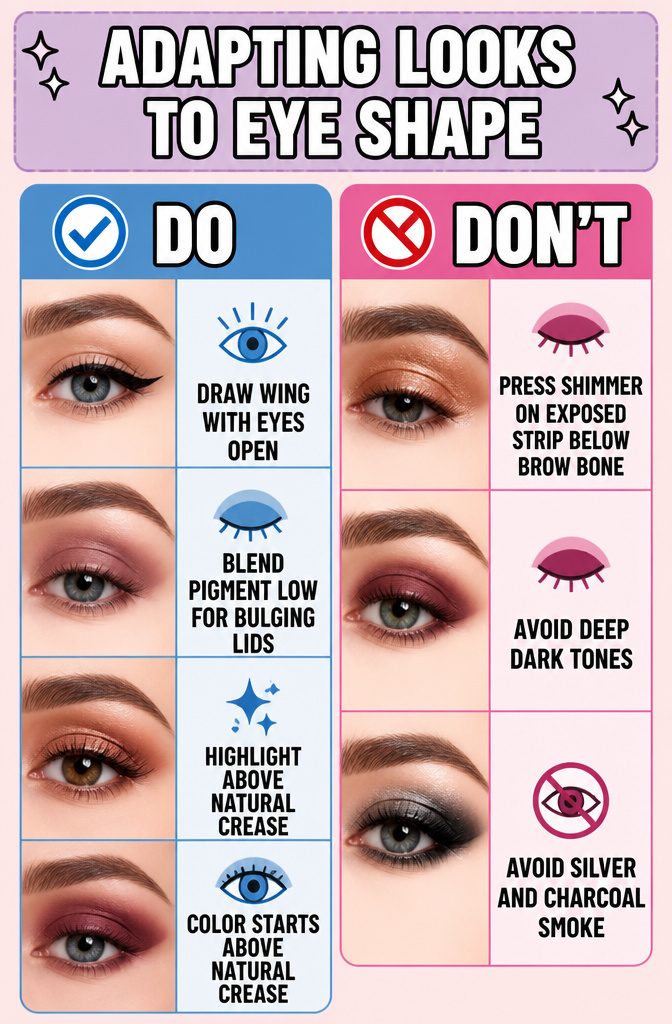
A cat-eye wing on hooded eyes lands completely differently than on an open lid.
The fold of skin that hides the mobile lid means the flick must be drawn with eyes open, looking straight ahead, so the wing sits visible above the crease rather than disappearing into it.
For almond-shaped eyes, the symmetry does much of the framing work already; a thin line following the natural curve keeps the shape from feeling dragged downward.
The mauve wash from the soft looks list reads as color only where lid skin actually shows.
On deeply set eyes, the socket shadow recedes so much that a gradient needs to sit higher, catching light on the orbital bone, or the color vanishes into hollow.
Prominent eyes, where the globe sits forward, need the opposite restraint; keep pigment low and blend downward so the lid does not read as bulging.
With copper sparkles or olive gradients, placement shifts by millimeters. On hooded lids, press shimmer onto the exposed strip below the brow bone, never where the fold conceals it.
Deep-set eyes carry burgundy or rose best when the color starts above the natural crease, letting it catch as you blink rather than sinking into shadow.
Silver and charcoal smoke I would skip entirely for hooded shapes without a practiced cut-crease hand; the dark tones flatten what little visible lid exists and the whole look reads bruised rather than dramatic.
Frequently Asked Questions
What colors make green eyes pop?
Warm tones like bronze, copper, and burgundy catch the gold and amber flecks in green irises and pull them forward.
Purple shades work too, since violet sits nearly opposite green on the color wheel and makes the color read sharper, almost electric. The balance comes from blending gradients so no single shade sits isolated.
Can I wear black eyeliner with green eyes?
Black liner does not hurt green eyes, but it does not help them either.
Deep purple or burgundy eyeliner builds contrast through color opposition rather than just darkness, and the red undertone pushes green forward in a way that reads as alive.
Dark brown or copper tones add warmth if the purple feels too cool for the day.
What is the best eyeshadow color for green eyes?
Bronze, copper, and burgundy are where most mornings should start with this eye color. A copper wash across the lid with a deeper bronze pressed into the outer corner does the work of interesting without reading as effort.
Lavender and plum also rate highly because the purple family sits opposite green on the color wheel and the contrast does the heavy lifting.